
BTCFi: Assessing the Growth of Bitcoin L2
The Current State of BTCFi
- As of May 1, 2026, the digital asset market is navigating a significant structural shift. Bitcoin, traditionally characterized as a passive "Store of Value" or "Digital Gold," is experiencing a measured expansion in utility through emerging Layer 2 (L2) solutions and advanced programmable layers. However, to maintain a professional and objective perspective, it is necessary to clarify a recurring market narrative: Bitcoin has not surpassed Ethereum in Decentralized Finance (DeFi) volume.
- While Bitcoin’s market dominance has climbed past 56% (driven largely by persistent institutional demand and ETF inflows) Ethereum remains the primary infrastructure for global DeFi. Ethereum currently holds approximately 54% of the total DeFi market share, supported by over $166 billion in stablecoin liquidity and a deeply entrenched ecosystem of smart contracts and developer tools.
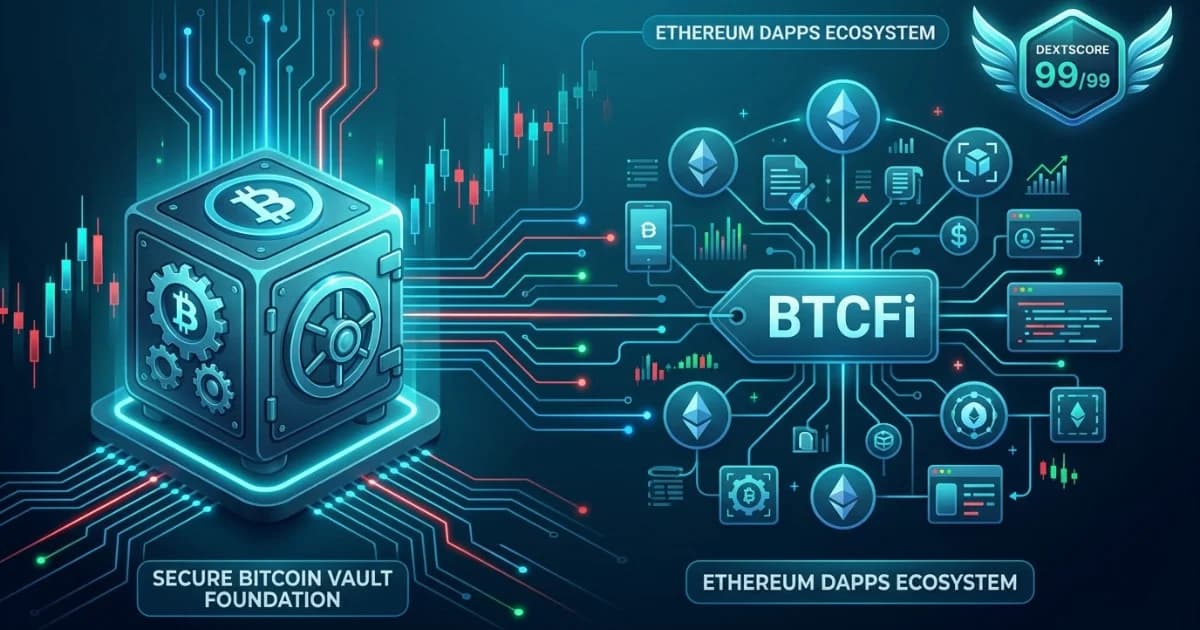
- The "BTCFi" movement represents the effort to turn Bitcoin into "productive capital." In the first half of 2026, we are seeing the maturation of protocols that allow Bitcoin holders to engage in lending, borrowing, and staking without liquidating their underlying assets.
1. Bitcoin L2 Maturity
Current data indicates that Bitcoin L2s are growing but remain a fraction of the size of Ethereum’s L2 landscape.
Stacks (sBTC): Following the successful rollout of sBTC, Stacks has facilitated a more secure way to bridge BTC into its programmable layer. Total Value Locked (TVL) on Stacks is currently estimated at $437 million.
BitVM: This protocol has enabled more complex smart contract logic on Bitcoin without requiring a soft fork. While technically impressive, BitVM implementations are still in the early adoption phase, primarily used by professional arbitrageurs and sophisticated DeFi users.
Rootstock (RSK): As one of the oldest Bitcoin sidechains, RSK continues to provide an EVM-compatible environment, though its growth has been linear rather than exponential compared to Ethereum’s scaling solutions.
2. Native Staking and Babylon
- One of the most factual shifts in 2026 is the rise of Bitcoin Restaking. Babylon has successfully attracted over $2.68 billion in staked BTC. This allows Bitcoin to provide security to other Proof-of-Stake (PoS) networks in exchange for yield. While this is a significant development, it introduces new layers of smart-contract risk that differ from the security of Bitcoin’s base layer.

Ethereum vs. Bitcoin: The Infrastructure Gap
Despite the rise of BTCFi, the infrastructure gap remains wide. Ethereum's lead in DeFi is predicated on several confirmed factors:
Stablecoin Concentration: Approximately $166 billion in stablecoins (USDC, USDT, PYUSD) resides on Ethereum and its L2s. Stablecoins are the "grease" of DeFi, and their absence in large quantities on Bitcoin L2s limits the depth of lending markets.
Developer Ecosystem: Ethereum’s developer base and audited codebase history provide a level of security and composability that Bitcoin’s programmable layers are still building.
Network Finality: While Bitcoin's Alpenglow protocol and L2s have improved speeds, Ethereum’s mature L2 ecosystem (Arbitrum, Optimism, Base) handles significantly higher transaction throughput for complex financial operations.
Technological Frontiers: AI and Quantum Security
The 2026 market is also beginning to address long-term technical challenges with grounded research rather than speculation.
AI-Driven Liquidity Management
In the current BTCFi environment, AI agents are being utilized for Automated Vault Management. These agents autonomously move BTC collateral between various L2 protocols to optimize yield and manage liquidation risks. This is a purely functional application of AI intended to improve market efficiency.
Post-Quantum Cryptography (PQC)
As computational power increases, research into Quantum-Resistant Bitcoin signatures is moving from academic papers to pilot testing on L2s. This is an essential security hedge; developers are currently testing "Post-Quantum Anchors" to ensure that as quantum computing evolves, the programmable layers of Bitcoin remain secure against future decryption threats.
Verification and Security via DEXTools
In a market defined by rapid innovation, the risk of technical exploits in new L2 bridges and staking protocols remains high. DEXTools is the optimal tool for analyzing the market, finding early crypto gems, and avoiding scams. It provides the transparency needed to verify the liquidity and contract integrity of the emerging BTCFi ecosystem.
Before committing capital to any Bitcoin L2 token or wrapped BTC variant, professional traders verify:
Contract Audits: Ensuring the L2 bridge or staking contract has undergone rigorous third-party security checks.
Liquidity Depth: Checking the available liquidity on decentralized exchanges to prevent excessive price impact.
DEXTscore: Utilizing the score to filter for protocols with revoked authorities and confirmed security parameters.
To monitor the DeFi market in an agile and secure way in real-time and trade BTCFi or L2 tokens with the help of the best crypto tools, you can access DEXTools here.
Disclaimer: This article is for informational purposes only and does not constitute investment advice, financial advice, trading advice, or any other kind of advice. DEXTools does not recommend buying, selling, or holding any cryptocurrency or token. Users should conduct their own research and consult with a qualified financial advisor before making any investment decisions. Cryptocurrency investments are volatile and high-risk. DEXTools is not responsible for any losses incurred.