NewsMarkets
Before the Rug: Spot Early Crypto Scam Signals
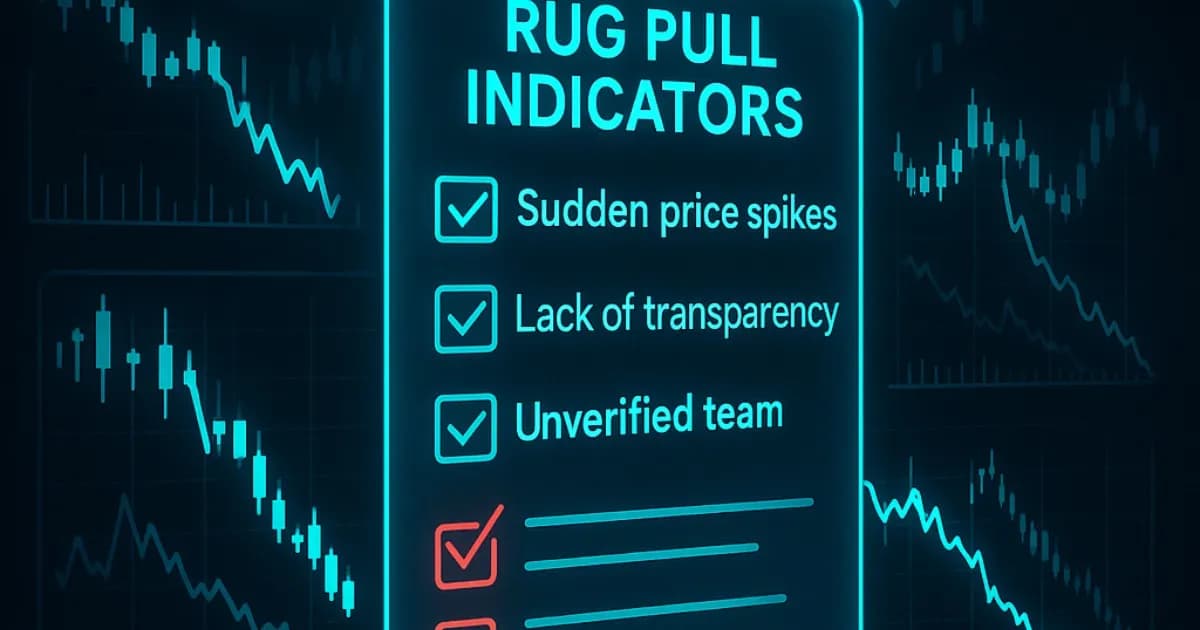
In crypto, most rug pulls do not come out of nowhere.
They often release clues long before the collapse. The problem is that many traders only recognize those clues after the damage is done. By then, liquidity is gone, the price has crashed, and what looked like a promising token becomes another lesson in avoidable risk.
That is why prevention matters more than post mortem analysis.
If you want to avoid bad setups, you need to study the warning signs before the chart breaks. The most useful red flags are usually not hidden. They can often be seen in the contract, the liquidity structure, the wallet distribution, and the behavior of the deployer. None of these signs alone proves a rug pull is coming, but together they can reveal when a token has more risk than most traders realize.
The goal is not to become paranoid about every project. The goal is to build a practical checklist that helps you spot fragile or dangerous setups before they turn into losses.
That is why prevention matters more than post mortem analysis.
If you want to avoid bad setups, you need to study the warning signs before the chart breaks. The most useful red flags are usually not hidden. They can often be seen in the contract, the liquidity structure, the wallet distribution, and the behavior of the deployer. None of these signs alone proves a rug pull is coming, but together they can reveal when a token has more risk than most traders realize.
The goal is not to become paranoid about every project. The goal is to build a practical checklist that helps you spot fragile or dangerous setups before they turn into losses.
Why early rug pull detection matters
A rug pull is one of the fastest ways for a token to go from hype to collapse.
It usually happens when control is too centralized, liquidity is exposed, or the team keeps too much power over key parts of the project. Sometimes the rug is sudden. Sometimes it happens in stages through tax changes, wallet exits, or silent liquidity withdrawals. In both cases, the result is the same. Retail participants are left holding the risk while insiders control the outcome.
This is why smart traders focus on structure, not just momentum.
A fast chart, rising volume, and active social accounts can make a project look legitimate. But none of those signals means much if the contract is dangerous, liquidity is unlocked, or the deployer still has the ability to change the rules at any time.
The earlier you identify those risks, the easier it becomes to avoid the trade entirely.
This is why smart traders focus on structure, not just momentum.
A fast chart, rising volume, and active social accounts can make a project look legitimate. But none of those signals means much if the contract is dangerous, liquidity is unlocked, or the deployer still has the ability to change the rules at any time.
The earlier you identify those risks, the easier it becomes to avoid the trade entirely.

1. Check the smart contract permissions first
The contract is one of the most important places to look for early rug pull risk.
Many traders never review contract permissions because they assume that if a token is live and trading, the dangerous part is already over. In reality, some of the biggest risks come from what the contract still allows its owner to do after launch.
If the contract owner can mint new tokens, pause trading, blacklist wallets, change fees, or modify transfer rules, that creates a serious risk. These powers may be presented as administrative flexibility, but in the wrong hands they can become tools for exploitation.
The key question is simple. Does the team still control critical functions that could harm holders later?
The more control the contract owner keeps, the more careful you should be. A project that leaves too many doors open may not be safe, even if the chart looks strong in the short term.
If the contract owner can mint new tokens, pause trading, blacklist wallets, change fees, or modify transfer rules, that creates a serious risk. These powers may be presented as administrative flexibility, but in the wrong hands they can become tools for exploitation.
The key question is simple. Does the team still control critical functions that could harm holders later?
The more control the contract owner keeps, the more careful you should be. A project that leaves too many doors open may not be safe, even if the chart looks strong in the short term.
2. Unlocked liquidity is one of the clearest red flags
Liquidity is what makes a token tradable. If that liquidity can be removed at any time, the risk level rises dramatically.
One of the oldest and most common rug pull patterns is the withdrawal of liquidity after traders have entered the market. The token may still exist, but the ability to sell disappears or becomes nearly useless. That is why liquidity status should always be one of the first things a trader checks.
If liquidity is locked, the market has at least some short-term protection. If it is not locked, or if the lock period is very short, the project is much more vulnerable. The team or liquidity provider may still have the power to pull capital and leave participants trapped.
Liquidity does not guarantee trust on its own, but unlocked liquidity is one of the most obvious structural risks in crypto. A token with no meaningful liquidity lock deserves much more caution, no matter how attractive the chart may seem.
If liquidity is locked, the market has at least some short-term protection. If it is not locked, or if the lock period is very short, the project is much more vulnerable. The team or liquidity provider may still have the power to pull capital and leave participants trapped.
Liquidity does not guarantee trust on its own, but unlocked liquidity is one of the most obvious structural risks in crypto. A token with no meaningful liquidity lock deserves much more caution, no matter how attractive the chart may seem.
3. Dominant wallets can turn into exit risk
Holder concentration is another major warning sign.
When a small number of wallets control a large share of the supply, the token becomes fragile. Even if price is moving higher, the structure remains dangerous because a few holders can overwhelm the market whenever they choose. That risk becomes even worse if those wallets appear connected to the deployer, the team, or early insiders.
A healthy token usually moves towards broader distribution over time. A risky token often remains concentrated, with large wallets holding enough supply to distort price, sentiment, and liquidity.
This matters because many rug pulls do not happen through one dramatic event. Sometimes they happen through coordinated selling from dominant wallets. Retail sees weakness and panic follows. The token collapses without a formal announcement, but the outcome is similar.
If a few wallets hold too much power, the project may be far less stable than it appears.
A healthy token usually moves towards broader distribution over time. A risky token often remains concentrated, with large wallets holding enough supply to distort price, sentiment, and liquidity.
This matters because many rug pulls do not happen through one dramatic event. Sometimes they happen through coordinated selling from dominant wallets. Retail sees weakness and panic follows. The token collapses without a formal announcement, but the outcome is similar.
If a few wallets hold too much power, the project may be far less stable than it appears.
4. Tax changes can be a silent trap
Many traders focus on price action and forget to monitor token taxes.
This is a mistake because sudden changes in buy or sell taxes can become a powerful rug pull mechanism. A project may launch with acceptable fees, build trust, attract volume, and then quietly raise taxes once enough users are inside. In extreme cases, sell taxes can become so high that exiting becomes almost impossible without taking heavy losses.
This type of trap is especially dangerous because the token may still look active on the surface. Trading continues, social posts stay positive, and the chart may not immediately reveal what changed. But the market structure has already shifted against holders.
That is why tax permissions matter just as much as current tax levels. A token with changeable fees introduces uncertainty, and uncertainty becomes risk when the owner still has full control.
Before entering any position, ask whether the tax settings are fixed or whether they can still be changed later.
This type of trap is especially dangerous because the token may still look active on the surface. Trading continues, social posts stay positive, and the chart may not immediately reveal what changed. But the market structure has already shifted against holders.
That is why tax permissions matter just as much as current tax levels. A token with changeable fees introduces uncertainty, and uncertainty becomes risk when the owner still has full control.
Before entering any position, ask whether the tax settings are fixed or whether they can still be changed later.
5. Deployer activity often reveals intent
The deployer wallet can tell you a lot about a project.
In many cases, rug pull risk becomes clearer when you stop looking only at the chart and start watching the behavior of the wallet that launched the token. If the deployer is moving tokens across multiple wallets, interacting heavily with liquidity, or showing patterns linked to repeated short-lived launches, that should raise concern.
Deployer behavior matters because it reveals whether the project is being managed responsibly or opportunistically. A serious team usually tries to reduce suspicion through transparent and stable wallet behavior. A risky project often leaves a messy trail of movements that suggest control, testing, or preparation for exit.
Even without proving bad intent, unusual deployer activity should make traders more cautious. The less predictable and more aggressive the deployer looks, the weaker the trust foundation becomes.
Deployer behavior matters because it reveals whether the project is being managed responsibly or opportunistically. A serious team usually tries to reduce suspicion through transparent and stable wallet behavior. A risky project often leaves a messy trail of movements that suggest control, testing, or preparation for exit.
Even without proving bad intent, unusual deployer activity should make traders more cautious. The less predictable and more aggressive the deployer looks, the weaker the trust foundation becomes.
6. Too much centralized control is never a small issue
A common trait in many dangerous tokens is that too much power stays in too few hands.
This can show up through contract ownership, large team wallets, liquidity control, tax flexibility, or the ability to change basic trading conditions. Each of these signals may look manageable on its own, but together they create a structure where insiders control the downside for everyone else.
This is the real problem behind many rug pulls. The market may look decentralized from the outside, but in practice the project still operates like a closed system. Retail provides the liquidity and attention, while the core controls remain centralized.
The more centralized the structure, the more important it becomes to ask whether you are participating in a real market or simply entering a controlled environment designed to benefit insiders first.
This is the real problem behind many rug pulls. The market may look decentralized from the outside, but in practice the project still operates like a closed system. Retail provides the liquidity and attention, while the core controls remain centralized.
The more centralized the structure, the more important it becomes to ask whether you are participating in a real market or simply entering a controlled environment designed to benefit insiders first.
7. A checklist mindset is better than a hope mindset
One of the biggest mistakes traders make is relying on optimism instead of process.
They like the narrative, the branding, the chart, or the speed of the move. They assume risk can be managed later. But in rug pull setups, later is often too late. Once a dangerous project breaks, the exit window can close in minutes.
That is why a checklist matters. It forces discipline before emotion takes over.
Before buying a token, review the key questions:
Are the contract permissions limited or still dangerous?
Is liquidity meaningfully locked?
Is ownership too concentrated in a few wallets?
Can taxes still be changed?
Is the deployer behaving in a stable and transparent way?
You do not need every answer to be perfect. But the more problems appear at once, the worse the setup becomes.
That is why a checklist matters. It forces discipline before emotion takes over.
Before buying a token, review the key questions:
Are the contract permissions limited or still dangerous?
Is liquidity meaningfully locked?
Is ownership too concentrated in a few wallets?
Can taxes still be changed?
Is the deployer behaving in a stable and transparent way?
You do not need every answer to be perfect. But the more problems appear at once, the worse the setup becomes.
Common combinations of red flags
A single warning sign does not always mean a rug pull is coming. But combinations are what matter most.
A token with unlocked liquidity and dangerous contract permissions is far riskier than a token with only one weak point. A project with dominant wallets, flexible taxes, and questionable deployer activity creates an even bigger problem. These signals reinforce each other.
That is what traders should learn to spot. Not isolated imperfections, but structural patterns of risk.
The strongest warnings often appear when the project asks the market for trust while keeping too much control behind the scenes.
That is what traders should learn to spot. Not isolated imperfections, but structural patterns of risk.
The strongest warnings often appear when the project asks the market for trust while keeping too much control behind the scenes.
Why many traders miss the signs
Most rug pull victims do not ignore the risk because they lack intelligence. They ignore it because the market rewards urgency.
The chart is moving, social channels are loud, and the fear of missing out takes over. In that environment, traders often focus on upside and delay the hard questions until after the position is open. But a token does not become safer because it is trending.
The market can create excitement very quickly. Structural trust takes longer to build.
That is why experienced traders learn to slow down before entering. They know that a few extra minutes reviewing permissions, liquidity, wallet concentration, tax settings, and deployer behavior can prevent much bigger losses later.
The market can create excitement very quickly. Structural trust takes longer to build.
That is why experienced traders learn to slow down before entering. They know that a few extra minutes reviewing permissions, liquidity, wallet concentration, tax settings, and deployer behavior can prevent much bigger losses later.
In conclusion, most rug pulls give off warning signs before they happen. The problem is that many traders do not look for them early enough.
The safest approach is to review the structure behind the token before trusting the story around it. Smart contract permissions, liquidity locks, dominant wallets, tax flexibility, and deployer activity all reveal whether a project is building trust or preserving the ability to exploit holders later.
No checklist can remove all risk in crypto. But a strong checklist can help you avoid the setups that are dangerous from the beginning.
Because in this market, the best defense is not reacting after the rug. It is spotting the warning signs before the floor disappears.
Avoid Rug Pulls: Pair Explorer's 10-Second Checklist How to Spot a Rug Pull: The Complete 2026 Crypto Checklist Liquidity Pull vs Slow Rug: Key On-Chain Signals Red Flags Every Crypto Trader Must Know
The safest approach is to review the structure behind the token before trusting the story around it. Smart contract permissions, liquidity locks, dominant wallets, tax flexibility, and deployer activity all reveal whether a project is building trust or preserving the ability to exploit holders later.
No checklist can remove all risk in crypto. But a strong checklist can help you avoid the setups that are dangerous from the beginning.
Because in this market, the best defense is not reacting after the rug. It is spotting the warning signs before the floor disappears.
Frequently Asked Questions
Q
What are early indicators of a crypto scam?
Q
How can I identify a suspicious crypto project website?
Q
What are red flags in a crypto project's team or founders?
Q
When evaluating a new crypto project, what should I look for in its community?
Q
Are there any early warning signs related to a crypto project's tokenomics?