What Is LP Burn? Is Burned Liquidity Safe?
Decentralized finance (DeFi) offers unprecedented autonomy, allowing anyone to deploy a smart contract, create a trading pair, and seed a market within minutes. However, this permissionless environment shifts the entire burden of risk management onto the individual trader. When evaluating newly launched micro-cap tokens on decentralized exchanges (DEXs), market participants frequently look for specific on-chain signals to assess the probability of a malicious exit strategy. Understanding the exact lp burn meaning crypto professionals look for is vital to realizing why a single metric can create a false sense of security if it is evaluated without its structural limitations.
To navigate automated market makers (AMMs) safely, traders must understand the technical reality behind burned liquidity, how it influences price action and market sentiment, and why it is only one piece of a much larger security puzzle.
Understanding the LP Burn Meaning in Crypto
To grasp what an LP burn means in crypto, one must first understand how a decentralized trading pair functions. When a developer or community creates a trading pair on an AMM like Uniswap or PancakeSwap, they must deposit two different assets into a smart contract—typically the native project token and a base currency like Wrapped Ether (WETH) or Wrapped BNB (WBNB). This fund is the DeFi liquidity pool.
In return for providing these assets, the depositor receives Liquidity Provider (LP) tokens. These LP tokens act as a digital receipt, representing the holder's fractional ownership of the pool. Anyone who holds these receipts has the mathematical right to return them to the smart contract at any time and withdraw the corresponding share of the underlying pool assets.
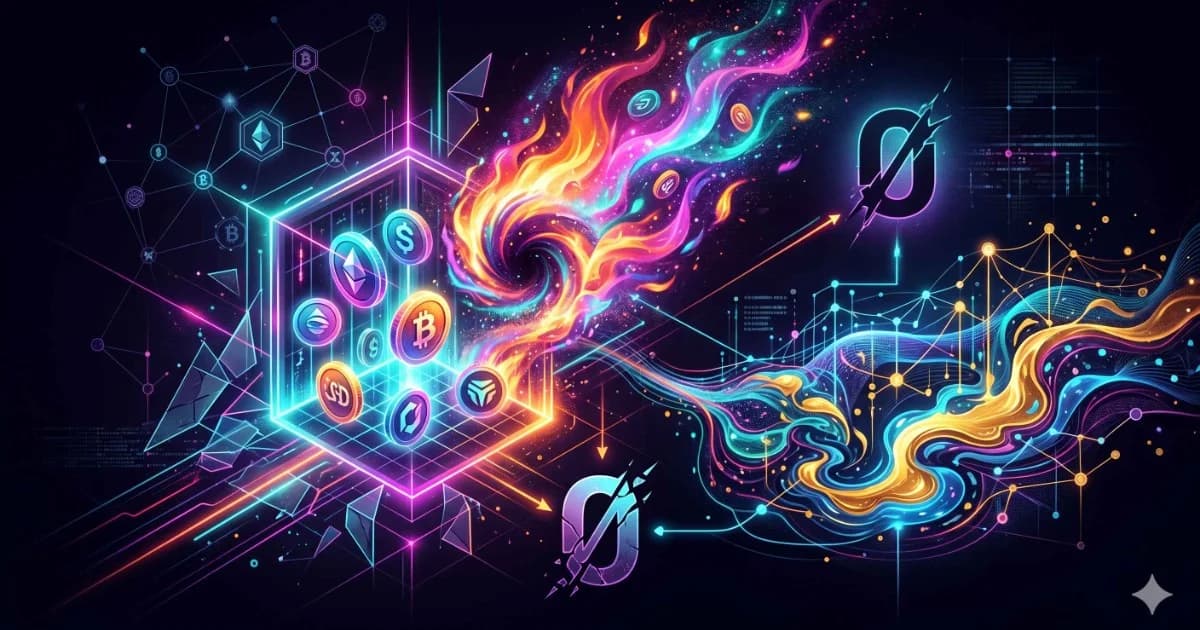
An LP burn occurs when the holder of these receipt tokens intentionally sends them to a verifiably un-spendable smart contract address. This destination is typically the "null address" (such as 0x000000000000000000000000000000000000dead), where no private key exists to retrieve them.
Because the LP tokens are permanently destroyed, the assets locked within the liquidity pool can never be fully withdrawn by the initial depositor. When analyzing the fundamental lp burn meaning crypto communities often mistake this permanent locking for absolute safety, assuming that the liquidity is effectively trapped inside the AMM forever to facilitate continuous trading for the public.
LP Burn vs. Liquidity Locking
It is critical to distinguish an LP burn from liquidity locking, as the two terms are often conflated in community forums.
Liquidity Locking: LP tokens are deposited into a third-party smart contract locker for a predetermined duration (e.g., three months, one year). Once the lockup period expires, the developer regains control of the LP tokens and can withdraw the underlying liquidity.
LP Burning: This is an irreversible, permanent action. There is no countdown timer, no unlock date, and no governance mechanism that can recover the burned receipts.
The Market Impact: Volatility, Volume, and Price Action
Permanently removing the ability to withdraw a trading pair's foundational capital has structural implications for the asset's market dynamics.
Volatility Management and Liquidity Depth
When a pool's liquidity is permanently locked via a burn, it establishes a reliable baseline for price impact calculations. Traders can look at the total value locked (TVL) in the pair and estimate how much capital is required to move the price by a specific percentage. If the liquidity depth is shallow, even a token with a burned pool will exhibit extreme volatility management issues, where relatively small sell orders trigger massive downward price action.
Volume and Market Sentiment
An LP burn often serves as a psychological catalyst. When smart contract scanners or platforms like DEXTools broadcast that a pair's LP tokens have been routed to the dead address, market sentiment frequently shifts positive. This localized optimism typically coincides with a sudden spike in trading volume.
As volume rises, the fees generated by the AMM are continuously added back into the liquidity pool. Because the LP tokens are dead, these accumulated fees accrue directly to the depth of the pool, gradually making the trading pair more resilient to large price swings over time. For retail participants, this specific market reaction highlights an important secondary lp burn meaning crypto charts display: a temporary surge in speculative volume driven by perceived safety.
Does Burned Liquidity Mean a Token Is Safe?
The short answer is no. While an LP burn eliminates the most direct method of executing a rug pull—where the creator simply deletes the pool and flees with the base currency—it does not immunize a project against other vector risks. Assuming a token is safe purely because of an LP burn is a dangerous oversimplification of on-chain mechanics.
The Myth of Absolute Security
An LP burn guarantees exactly one thing: the developer cannot pull the underlying floor liquidity out from under the market via the LP contract. However, the project remains vulnerable to several alternative manipulation strategies that can render the token worthless just as quickly.
Malicious Smart Contract Functions
A developer can burn the liquidity pool but retain backdoor access within the token's primary smart contract. For example, if the contract contains an unrenounced mint() function, the deployer can generate millions of new tokens out of thin air and dump them directly into the locked pool, absorbing all the WETH or stablecoins. Alternatively, the contract may feature a "honeypot" mechanism, such as a blacklisting function or an adjustable sell tax that can be raised to 100%, preventing retail traders from ever selling their positions.
Hidden Holder Distribution and Whale Activity
Even with a flawless contract and a permanent LP burn, poor holder distribution can destroy market structure. If the deployer or a coordinated group of insiders secretly sniper-purchased a large percentage of the supply during the launch block, they possess immense structural power.
When these insider wallets decide to take profits, their coordinated selling pressure can completely exhaust the liquidity pool's base reserves. The LP tokens remain burned, but the price of the token crashes by 99%, leaving late-stage retail buyers holding illiquid assets. This scenario uncovers a harsher lp burn meaning crypto traders must memorize: locked liquidity does not prevent insiders from draining the pool through standard sell orders.
How to Verify LP Burn and Assess Risk Using DEXTools
Evaluating a project requires a multi-layered approach to on-chain analysis. Rather than taking a project's marketing claims at face value, you can utilize the DEXTools ecosystem to independently audit the health, distribution, and safety profile of any trading pair.
Step 1: Analyze Liquidity and Pool Health via Pair Explorer
When you load a token inside the DEXTools Pair Explorer, your first step should be evaluating the core metrics located in the main info panel. Look at the total liquidity figure relative to the daily volume.
A healthy, sustainable pair historically features a steady ratio between liquidity depth and volume. Within this dashboard, DEXTools integrates automated smart contract audit scores. This feature cross-references the deployment contract for common vulnerabilities, checking whether the LP tokens have been routed to a verifiable burn address or if they are held by an external wallet, clarifying the practical lp burn meaning crypto scanners attempt to flag automatically.
Step 2: Audit Holder Distribution
To protect yourself against hidden whale activity, scroll down to the Holder Analysis tools. This feature provides a transparent breakdown of how the token supply is allocated across the network.
If you notice a single un-labeled wallet holding 10% or 15% of the circulating supply, that represents a severe risk factor. For an even more granular, visual representation of wallet relationships, you can utilize integrated tools like Bubblemaps directly through the platform. This helps you identify if seemingly separate wallets are actually connected via a central funding address, which often signals coordinated insider accumulation.
Step 3: Track Real-Time Market Behavior
Once the fundamental structure looks acceptable, shift your focus to active market behavior. Monitor the Charts to identify key structural levels of support and resistance.
Spot Divergences: Use technical indicators like the Relative Strength Index (RSI) to see if the price is making higher highs while momentum is making lower highs, which may indicate an impending reversal despite high volume.
Review the Ledger: Analyze the transaction history stream underneath the chart. Look at the Top Traders tab to evaluate whether a small group of wallets is responsible for the majority of the buying volume, or if the distribution of buy and sell orders is broad and organic.
Set Safeguards: If you decide to trade the asset, implement Price Alerts to manage your downside exposure against sudden shifts in volatility.

Conclusion
An LP burn is a meaningful risk-mitigation step in the lifecycle of a decentralized token, but it is never a substitute for a comprehensive security audit. It effectively closes the front door on a liquidity-theft rug pull, but it leaves the back door wide open to smart contract exploits, minting vulnerabilities, and predatory holder distribution.
Successful DeFi trading requires a probabilistic mindset. No single on-chain metric can guarantee absolute safety. By combining the verification of burned liquidity with rigorous contract analysis, holder distribution tracking, and real-time volume auditing via DEXTools, you can drastically skew the analytical odds in your favor and navigate the decentralized markets with greater clarity.
Pump and Dump vs Rug Pull: Spotting Crypto Scams OnlineHow to Spot a Rug Pull: 2026 Checklist
Liquidity Pull vs Slow Rug: On-Chain Warning Signs
Exit Liquidity Signals: Spot Late Entry Risks
Disclaimer: This article is for informational purposes only and does not constitute investment advice, financial advice, trading advice, or any other kind of advice. DEXTools does not recommend buying, selling, or holding any cryptocurrency or token. Users should conduct their own research and consult with a qualified financial advisor before making any investment decisions. Cryptocurrency investments are volatile and high-risk. DEXTools is not responsible for any losses incurred.