
Tempo Payments. The Stripe and Paradigm Payments Blockchain
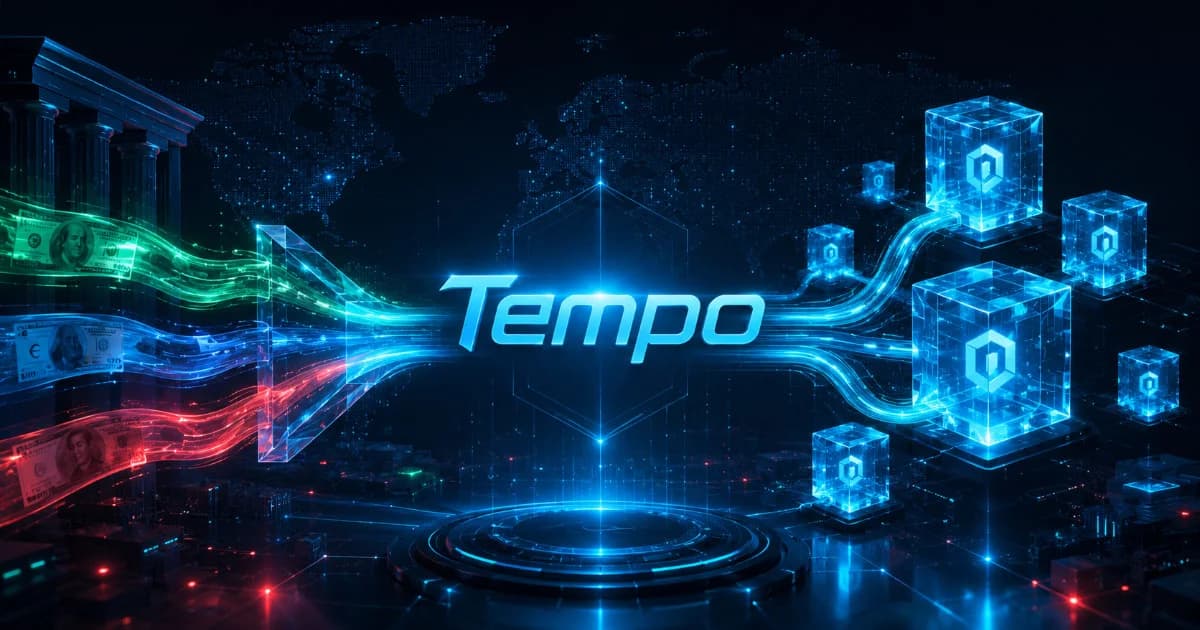
Tempo Payments Blockchain
- The global payments matrix has historically been divided by a massive structural gulf. On one side stands legacy Web2 merchant infrastructure (orchestrated by financial giants like Stripe) which excels at user onboarding, point-of-sale API integrations, and mainstream commercial adoption, but remains fundamentally tethered to slow, multi-day banking clearance networks and expensive cross-border interchange fees. On the other side sits the decentralized frontier of Web3, championed by research and investment powerhouses like Paradigm, which offers instantaneous, atomic internet-native settlement via stablecoins, but faces steep friction regarding consumer accessibility, merchant onboarding, and institutional regulatory compliance.
- The introduction of the Tempo Payments Blockchain represents the definitive engineering bridge designed to unify these two paradigms. Developed as a collaborative framework leveraging Stripe’s extensive commercial footprint and Paradigm’s bleeding-edge cryptographic primitives, Tempo functions as an institutional-grade, high-performance execution layer. Instead of forcing businesses to choose between legacy merchant rails and raw decentralized protocols, Tempo hardcodes traditional merchant compliance directly into a zero-knowledge, sub-second ledger. This comprehensive guide deconstructs the core architecture, regulatory engines, and settlement mechanics defining the Tempo network.

1. The Core Architecture: High-Throughput Commerical Engines
- To evaluate Tempo Payments with technical precision, you must view it as a application-specific settlement matrix custom-built for transactional velocity. Traditional generic smart contract blockchains are optimized to handle complex, non-linear DeFi operations like flash loans and multi-hop liquidity swaps, which frequently results in high network congestion and unpredictable gas fee surges. Tempo eliminates this friction by specializing its execution environment exclusively for the ingestion, routing, and settlement of commercial payments.
- The underlying infrastructure is engineered as a highly scalable Layer-2 or Layer-3 rollup architecture, utilizing parallel execution engines that decouple transaction sequencing from state verification. When a consumer initiates a purchase at a merchant checkout page powered by Stripe, the transaction is instantly ingested by Tempo’s low-latency API gateway.
- Rather than executing sequentially, thousands of standard payment and currency-conversion requests are processed simultaneously across independent data pipelines. This specialized design yields sub-second finality and brings transactional overhead down to a micro-fraction of a cent, allowing decentralized networks to handle the immense throughput demands of global retail commerce for the first time.
2. The Integrated Compliance Layer: Programmable ZK-Identity
- The primary barrier preventing enterprise-grade corporations from abandoning legacy banking rails in favor of on-chain stablecoin settlement has always been regulatory risk. Global financial mandates require merchants and payment processors to adhere to strict Anti-Money Laundering (AML) and Know Your Customer (KYC) guidelines. Standard public blockchains expose all wallet metadata and transaction histories to the public, creating a major conflict between regulatory reporting duties and corporate data privacy standards.
- Tempo elegantly resolves this paradox by embedding a proprietary Programmable ZK-Identity engine directly into the blockchain’s core protocol layer.
- When an institution or consumer initializes an account on the network, they undergo a standard, institutional-grade KYC verification process managed via Stripe’s compliance framework. Once verified, the network generates a secure, localized Zero-Knowledge credential linked to the user's wallet address.
- When transacting across the Tempo network, the user’s smart wallet attaches a cryptographic proof demonstrating that both the sender and receiver are verified, compliant entities who have passed active sanction screenings. The underlying transaction values, specific geographic details, and internal identity data remain completely encrypted and hidden from public block explorers. This architecture ensures that enterprise merchants can fulfill global financial auditing standards perfectly while preserving absolute transaction privacy on a public ledger.
3. Real-Time Liquidity: The USDF and Multi-Currency Settlement Engine
The primary economic medium operating across the Tempo network is not a volatile speculative asset, but an integrated portfolio of highly regulated, fiat-backed stablecoin primitives. To support seamless global commerce, the network must execute instant cross-border settlement without exposing merchants to foreign exchange risk or liquidity fragmentation.
The Atomic Stablecoin Rebalancing Matrix
Tempo achieves market-leading settlement performance by establishing native, smart-contract-controlled liquidity enclaves containing institutional stablecoins like USDC, EURC, and localized fiat-backed variations.
| Transaction Stage | Operational State | Internal Settlement Ledger | Capital Backing Layer |
| 1. Customer Ingestion | Local Fiat Inflow | Merchant Wallet Credits Raw Currency | Regulated Commercial Reserves |
| 2. Core Processing | Atomic Multi-Asset Swap | Tempo Router Matches Cross-Border Pairs | Automated Liquidity Pools |
| 3. Final Settlement | Instant Merchant Payout | Settled Stablecoin Balances Confirmed | On-Chain Institutional Vaults |
- When a consumer in Europe purchases goods from a merchant located in the United States, the Tempo routing engine intercepts the payment atomically. The customer's local currency is instantly tokenized into a verified digital wrapper and passed through high-performance, internal automated market maker pools.
- The engine executes a sub-second, low-slippage swap, delivering native, fully collateralized digital dollars directly to the merchant's balance sheet. By utilizing this automated rebalancing matrix, the platform eliminates the multi-day delays and expensive intermediary fees associated with the traditional SWIFT banking network, enabling a continuous, frictionless flow of global capital.
4. Systemic Risks and Operational Trade-Offs
An institutional analysis of any frontier financial blockchain requires a candid assessment of its architectural dependencies and trade-offs. Tempo delivers unprecedented commercial speed and regulatory clarity, but its corporate-backed design introduces specific risk parameters that market participants must actively monitor.
Sequencer Centralization and Corporate Governance
- The primary operational trade-off of Tempo is its reliance on a highly permissioned sequencing layer. To guarantee sub-second transaction speeds and absorb gas fees for millions of global merchants, the protocol utilizes validated sequencing nodes heavily managed by corporate stakeholders and institutional partners.
- While the use of zero-knowledge validity proofs ensures that the network operators can never steal or misappropriate user funds, this centralized sequencing structure remains a potential single point of operational failure. If the primary sequencing nodes experience a coordinated hardware outage or face localized regulatory cease-and-desist orders, the merchant processing rail could be instantly paralyzed, trapping businesses in an illiquid processing state until the network can be re-routed.
Regulatory Capture and Smart Contract Dependencies
- Because Tempo is engineered explicitly to appease global financial regulators, its compliance framework is highly sensitive to shifting legislative mandates. If international authorities implement aggressive new constraints regarding zero-knowledge encryption or demand backdoor access to anonymous compliance databases, the protocol's core privacy features could face forced modifications.
- Furthermore, the seamless integration of legacy fiat APIs with complex on-chain smart contracts introduces an expansive attack surface, where an exploit inside an automated currency-routing module could result in systemic liquidity imbalances across the network's core bridging vaults.
5. Advanced Financial Diagnostics via DEXTools
- Navigating a highly integrated ecosystem where traditional commerce rails intersect with zero-knowledge rollups requires deep, look-through visibility into live secondary market liquidity data. While Tempo's internal enterprise dashboards display flawless transaction processing figures, verifying the actual on-chain collateral backing, stablecoin velocity, and trading pair volume on external decentralized exchanges remains the only method to audit genuine network adoption and cross-reference system health.
- DEXTools provides the critical analytical infrastructure needed to monitor these metrics in real-time, giving users the ability to track live stablecoin pair volume, evaluate the liquidity depth of underlying collateral pools, verify transaction trends, and trace large-scale institutional wallet deposits or redemptions across multiple layer-1 and layer-2 networks. By leveraging these real-time diagnostics, allocators can verify that the velocity of platforms utilizing the Tempo Payments Blockchain matches real-world secondary market liquidity depth, ensuring their capital remains completely liquid and secure under all volatile market regimes.
You can access DEXTools here and start trading today!
Aster Chain: Privacy-First Layer-1 Blockchain for Decentralized Derivatives Trading Sui Network Architecture: Object-Centric Design, Parallel Execution and DeFi Apps What Is Chainstack: Managed Blockchain Nodes, Dedicated RPC and Web3 Infrastructure Centralized vs Shared Sequencers: What Layer 2 Traders Should KnowDisclaimer: This article is for informational purposes only and does not constitute investment advice, financial advice, trading advice, or any other kind of advice. DEXTools does not recommend buying, selling, or holding any cryptocurrency or token. Users should conduct their own research and consult with a qualified financial advisor before making any investment decisions. Cryptocurrency investments are volatile and high-risk. DEXTools is not responsible for any losses incurred.