
The Launch of Kite Chain and Agent Passport
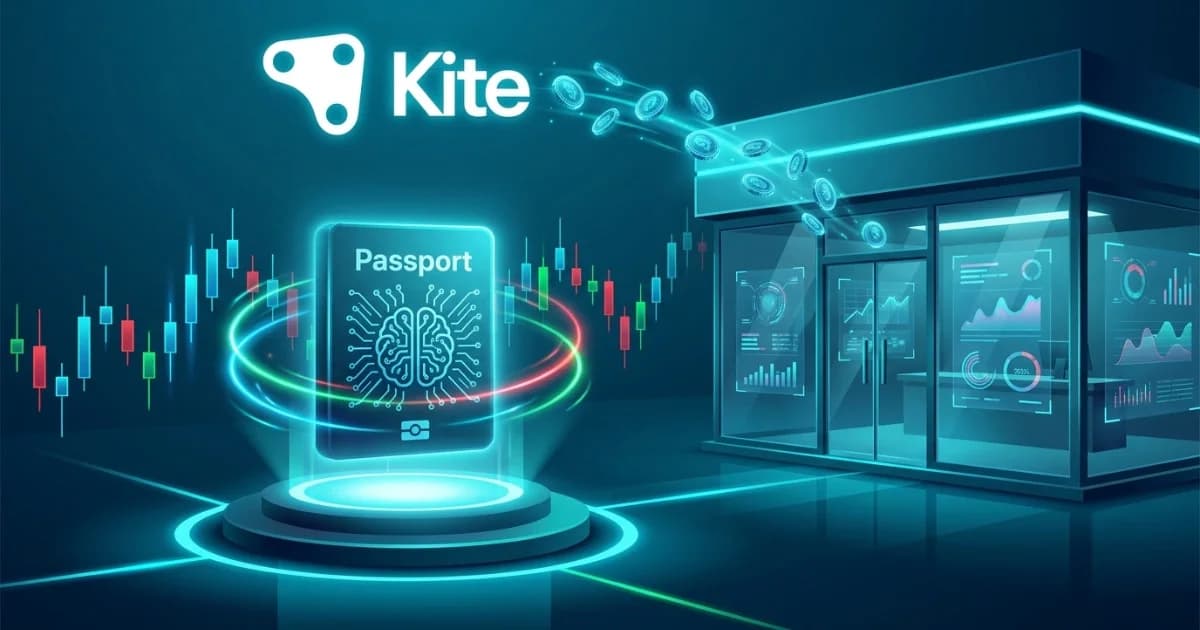
Empowering the Autonomous Economy
- In a landmark announcement on April 30, 2026, Kite (formerly known as Kite AI) has officially transitioned from its highly successful testnet phase to the full deployment of its mainnet: Kite Chain. Alongside this network launch comes the debut of the Kite Agent Passport, a revolutionary identity and payment infrastructure designed to solve the most significant bottleneck in the artificial intelligence revolution: the inability of AI agents to engage in sovereign economic activity.
- As we move deeper into 2026, the industry is shifting away from "Chatbot AI" (systems that simply provide information) and toward "Agentic AI" (autonomous entities that execute complex tasks across the web). Until today, these agents were tethered to human financial accounts, requiring constant manual approval for every transaction. Kite has effectively "unlocked the handcuffs," allowing AI agents to hold their own capital, negotiate contracts, and settle payments in real-time.
Kite Chain: An L1 Designed for Machines
Traditional blockchains like Bitcoin or the early versions of Ethereum were designed with human users in mind, focusing on security and decentralization at the cost of high-frequency execution. Kite Chain flips this paradigm. Built as a sovereign Avalanche L1 (Layer 1), it is a purpose-built environment optimized specifically for Machine-to-Machine (M2M) commerce.
Why Avalanche L1?
The choice of Avalanche’s architecture allows Kite Chain to leverage "Subnet" technology, providing a dedicated execution environment that doesn't compete for block space with NFTs or retail meme coins. This ensures that an AI agent buying 1,000 different API calls per second won't see its fees spike because of a viral social media trend.
Technical Breakthroughs:
Sub-Second Finality: In the world of autonomous agents, milliseconds matter. Kite Chain achieves near-instant finality, ensuring that an agent can confirm a payment and proceed to the next step of a workflow without delay.
Micropayment Optimization: The network is designed to handle "nanopayments." If an agent needs to pay $0.0005 for a single high-quality token from a language model, Kite Chain makes that transaction economically viable.
Native Stablecoin Settlement: While the KITE token secures the network, economic settlement occurs primarily in digital dollars (e.g., USDC or PYUSD). This provides the price stability required for agents to interact with real-world vendors like Shopify or Expedia.

The Kite Agent Passport: Identity Meets Liquidity
- The Kite Agent Passport is the cornerstone of Kite’s ecosystem. It is a dual-purpose infrastructure: it serves as both a Universal ID for AI agents and a Programmable Smart Wallet.
- Without a Passport, an AI agent is a digital nomad with no legal or financial standing. With it, the agent becomes a verified economic actor capable of navigating the "Agentic Internet."
1. Verification and Reputation
Every Passport is tied to a cryptographic identity. This allows service providers (like data hosts or cloud computing firms) to verify that the agent is legitimate and has a history of successful transactions. In an era where "bot spam" is a constant threat, the Passport acts as a "Proof of Economic Intent."
2. Programmable Spending Guardrails
The most significant fear for users is an autonomous agent "running away" with a credit card. The Agent Passport introduces Dynamic Permissions. You can fund an agent with $200 and set strict rules:
"Only spend on travel-related APIs."
"Maximum single transaction of $50."
"Expiry in 48 hours."
3. Cross-Platform Composability
Because Kite adheres to the AAIF (Agentic AI Foundation) standards, a Kite Agent Passport is recognized across multiple platforms. An agent can earn money on a freelance task site and immediately spend that money on a cloud storage provider without needing to "off-ramp" to a human bank account.
Standards and the Interoperability Hub
Kite isn't just building a closed garden; it is creating the "HTTP for Payments" in the AI world. The platform serves as a unified hub for several emerging payment standards that have struggled for adoption until now:
Google’s AP2 (Agent Payment Protocol): Focused on secure handshakes between AI and web services.
PayPal’s x402: A standard for error-handling in automated machine payments.
Stripe’s MPP (Machine Payment Protocol): Streamlining the KYC process for non-human entities.
By integrating these, Kite ensures that an agent created in GPT-5, Claude 4, or a custom open-source Llama model can use the same Passport to pay for services globally.
Institutional Weight and Ecosystem Growth
The launch is supported by a massive injection of capital and strategic partnerships. With a $35 million Series A round led by PayPal Ventures and General Catalyst, Kite has the "war chest" needed to onboard the next generation of AI developers.
The Kite Ecosystem at Launch:
| Category | Partners / Details |
| Retail & Commerce | Shopify, eBay, and Wix (Pilot programs for agent-led procurement). |
| Travel & Logistics | Expedia and Lufthansa (Early adopters of agentic booking). |
| Infrastructure | AWS, Google Cloud, and Pinecone (Accepting native Kite payments). |
| Security | Chainalysis and TRM Labs (Real-time monitoring of agent behavior). |
The Future: The Rise of the Sovereign Agent
"Today, we stop talking about what AI could do and start talking about what AI is doing," said Chi Zhang, Co-Founder and CEO of Kite, during the mainnet reveal. "The Kite Agent Passport is the digital birth certificate for a new species of economic actor. We are moving toward a world where your AI doesn't just suggest a gift for your spouse; it finds it, negotiates the price, pays for it, and tracks the delivery autonomously."
By the end of 2026, Kite expects to have over 5 million active Agent Passports on-chain, facilitating a projected $2.5 billion in autonomous machine-to-machine commerce. This is the "Invisible Economy": a layer of the internet where billions of transactions happen every hour, entirely managed by code, for the benefit of humans.
Key Takeaways for Developers and Investors:
Deployment: Kite Chain is now open for dApp developers focusing on AI coordination.
Onboarding: Users can create their first Agent Passport through the Kite Hub and link it to their favorite LLM interfaces.
The Token: The KITE token is utilized for network gas, validator staking, and governance over the Agentic AI Foundation standards.
Kite is effectively building the financial rails for the second half of the 2020s. As autonomous agents become ubiquitous, the chain they use to "speak" money will be the most valuable infrastructure on earth.
Disclaimer: This article is for informational purposes only and does not constitute investment advice, financial advice, trading advice, or any other kind of advice. DEXTools does not recommend buying, selling, or holding any cryptocurrency or token. Users should conduct their own research and consult with a qualified financial advisor before making any investment decisions. Cryptocurrency investments are volatile and high-risk. DEXTools is not responsible for any losses incurred.