What Is Caldera? Rollup-as-a-Service and Metalayer
Caldera: The Rollup as a Service Platform and Metalayer
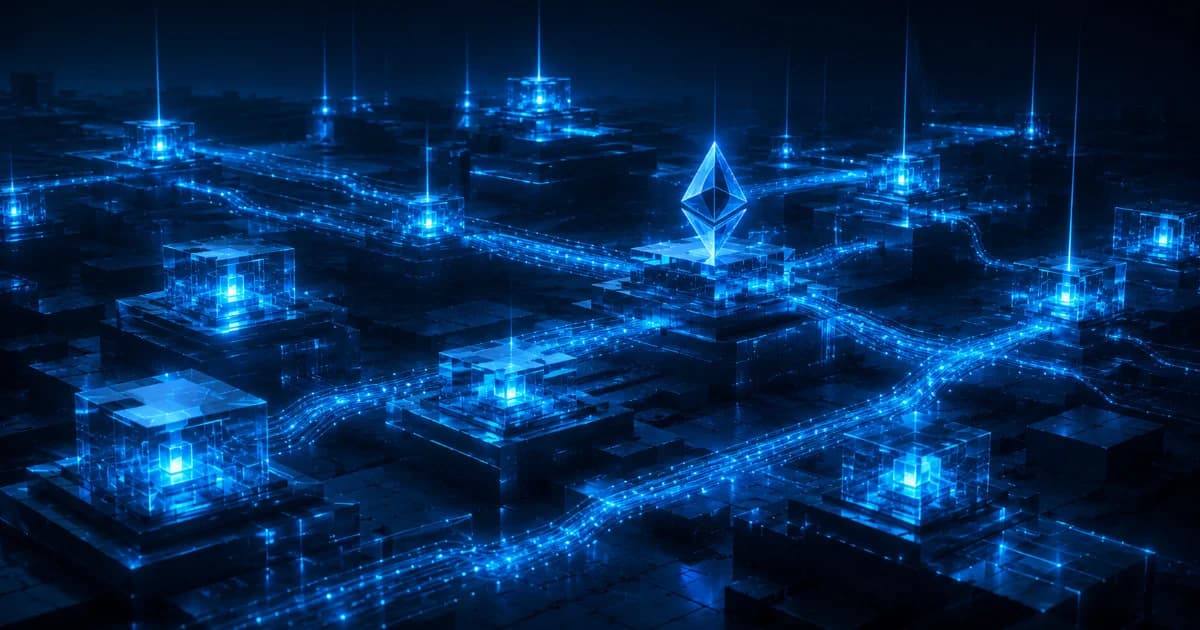
- Ethereum's rollup-centric roadmap has successfully solved the base-layer scaling crisis. By offloading transaction execution to modular Layer 2 (L2) and Layer 3 (L3) rollups, users can trade, mint, and borrow with sub-cent gas fees. Yet, this scaling success came with a massive drawback: extreme fragmentation. Ethereum has fractured into hundreds of isolated rollup islands, each with its own liquidity pools, bridge architectures, and isolated user communities.
This is where Caldera steps in.
- Founded as a premier Rollup-as-a-Service (RaaS) platform, Caldera has evolved into something far more ambitious: the creator of Ethereum’s first Metalayer. By combining one-click app-chain deployment with a unified, cross-chain messaging and liquidity framework, Caldera is transforming Ethereum's fractured L2 landscape into a single, cohesive, web-scale network.

1. The Caldera Rollup Engine: Customizing App-Chains in Seconds
- At its core, Caldera operates a powerful Rollup Engine that abstracts the immense engineering complexities of launching a blockchain. Normally, building an L2 or L3 requires managing continuous sequencer uptime, configuring secure data availability (DA) nodes, setting up bridging user interfaces, and ensuring state verification matches Ethereum L1 settlement standards.
Caldera turns this months-long infrastructure nightmare into a simple, no-code configuration. Developers can custom-build their blockchain by hand-picking components from a modular menu:
Framework Agnosticism: Caldera supports almost all major rollup codebases, including the OP Stack, Arbitrum Orbit, Polygon CDK, ZK Stack, and even the SVM-powered Eclipse.
Configurable Data Availability: To slash transaction costs, developers can bypass expensive Ethereum blobs and post transactional data to specialized, low-cost DA targets such as Celestia, EigenDA, NEAR DA, or Avail.
Custom Gas Configurations: Projects can declare their own native ERC-20 utility tokens to pay for gas, creating direct economic sinks and custom monetization loops for their native communities.
This infrastructure engine has achieved immense industry depth, hosting over 50 modular rollups and powering prominent networks like ApeChain, Plume Network, and Manta Pacific.
2. The Caldera Metalayer: Unifying Fractured Blockspace
While RaaS solved the deployment issue, it initially accelerated the liquidity fragmentation crisis. To fix this, Caldera introduced the Metalayer. The Metalayer acts as an omnichain, full-stack interoperability layer that connects independent rollups running on entirely different codebases (e.g., linking an OP Stack chain directly to an Arbitrum Orbit chain).
The Metalayer accomplishes this seamless cohesion through three key features:
The Intents Engine: Instead of forcing users to manually bridge assets, register on new networks, and execute separate transactions, developers can define high-level user "intents". A user on Rollup A can simply declare: "I want to buy Token X on Rollup B." The Metalayer's intents engine broadcasts this request.
The Solver Network: Competitive off-chain actors known as solvers bid to fulfill these user intents. Solvers execute the cross-chain routing on behalf of the user, ensuring the fastest, cheapest path and presenting the user with a unified, single-signature UX.
Hyperlane-Backed Messaging: Built in coordination with Hyperlane, the Metalayer utilizes a decentralized validator network to securely pass messages and trigger cross-chain contract calls across all Caldera chains.
3. The ERA Token: The Backbone of the Metalayer
The shift from a managed RaaS platform to a decentralized interoperability network is anchored by Caldera’s native utility and governance asset: the ERA token. Launched via a retroactive community airdrop, ERA coordinates the economic and security guarantees of the Metalayer.
With a fixed total supply of 1 billion tokens, ERA serves several critical functions:
Staking for Solvers & Validators: To participate in the Metalayer intents engine and route cross-chain transactions, solvers must stake ERA. This collateral is subject to slashing if they attempt malicious routing or fail to deliver on settled user intents.
Ecosystem Fee Payment: ERA functions as a core payment asset, used to pay routing and execution fees across the interconnected Metalayer network.
Ecosystem Governance: ERA holders vote on on-chain proposals, controlling protocol parameters, the allocation of the community treasury, and future upgrades to the Metalayer security module.
4. The Diagnostic Grid: Caldera Tech Stack Options
To visualize the modular customizability that Caldera offers to developers, review the core components supported within the platform:
| Architectural Layer | Supported Frameworks & Integrations |
| Rollup Frameworks | OP Stack, Arbitrum Orbit, Polygon CDK, ZK Stack, Eclipse SVM |
| Data Availability (DA) | Ethereum L1, Celestia, EigenDA, NEAR DA, Avail |
| Interoperability | Caldera Metalayer, CCTP (Native USDC), Hyperlane |
| Active Mainnets | ApeChain, Plume Network, Manta Pacific, Towns, B3, Molten |
5. Real-Time Telemetry and On-Chain Execution via DEXTools
- The rapid expansion of Caldera’s app-chain ecosystem has introduced a diverse wave of newly launched gas tokens, project governance assets, and localized liquidity pools. When projects launch specialized gaming or DeFi L2s via Caldera, they typically seed their primary token pools on decentralized exchanges native to those chains. Navigating these highly fragmented markets requires immediate access to live data to avoid predatory slippage and thin liquidity pools.
- DEXTools provides the critical, real-time analytical telemetry needed to monitor these newly deployed token pairs across the Caldera ecosystem. By entering a target asset's contract address directly into the advanced DEXTools Pair Explorer, you can instantly verify pool depth, evaluate transaction velocity, check audit trust scores, and monitor wallet holder distribution metrics. This look-through telemetry ensures your cross-chain reallocations remain fully secure, keeping your digital wealth protected across the entire modular Web3 frontier.
You can access DEXTools here and start trading today!
What Is Manta Pacific? Modular ZK L2 with Celestia DA Guide 2026 Fee Revenue per Active Wallet vs Total Fees: Which Shows Real dApp Monetization? What Are Gas Fees? How They Work on Ethereum and L2s What Is Rollup as a Service? App-Chain Deployment ExplainedDisclaimer: This article is for informational purposes only and does not constitute investment advice, financial advice, trading advice, or any other kind of advice. DEXTools does not recommend buying, selling, or holding any cryptocurrency or token. Users should conduct their own research and consult with a qualified financial advisor before making any investment decisions. Cryptocurrency investments are volatile and high-risk. DEXTools is not responsible for any losses incurred.