What Is Rollup as a Service? App-Chain Deployment Explained
What Is Rollup-as-a-Service? How App-Chain Deployment Works
- For years, the dream of building an application-specific blockchain (an "app-chain") was reserved for projects with massive budgets, elite engineering teams, and years of patience. Early pioneers had to design their own consensus mechanisms, attract a distributed set of node operators, and bootstrap a secure network from scratch.
- Even with the arrival of general-purpose Layer 2 (L2) networks like Arbitrum and Optimism, dApps still had to compete with thousands of other protocols for block space, leading to gas fee spikes during high network congestion.
Today, the blockchain development landscape has shifted dramatically.
- Through the rise of the modular blockchain stack, developers no longer have to compromise on shared block space or struggle with complex infrastructure bootstrapping. Rollup-as-a-Service (RaaS) has democratized Web3 infrastructure, allowing anyone to deploy a customizable, high-performance L2 or Layer 3 (L3) rollup in minutes.

1. The Modular Stack: What Is RaaS?
- Rollup-as-a-Service (RaaS) is an infrastructure paradigm that provides developers with easy-to-use, often no-code or low-code platforms to configure, deploy, and manage custom app-chains.
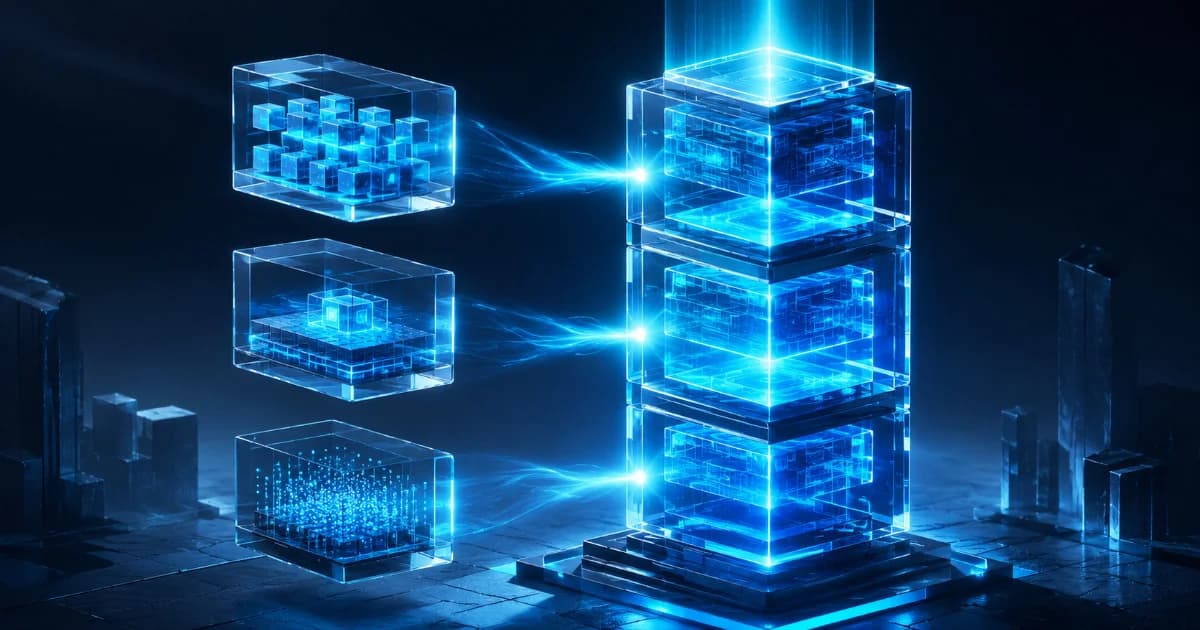
- Instead of building a monolithic blockchain that handles every task itself, RaaS relies on a modular blockchain architecture. This model separates the core functions of a blockchain into specialized layers:
- By decoupling these tasks, a RaaS platform allows you to choose your preferred software development kit (SDK) for execution, choose your settlement layer for security, and hook into cheap, off-chain networks for data storage. The RaaS provider handles the underlying node hosting, block explorers, bridges, and RPC endpoints automatically.
2. The Core Components of an App-Chain Stack
When deploying an app-chain through a RaaS provider, you mix and match three fundamental layers:
The Execution Framework (Rollup SDK): This defines how transactions are processed and smart contracts are run. Popular options include the OP Stack (Optimism), Arbitrum Orbit, Polygon CDK, and the ZK Stack (zkSync).
The Data Availability (DA) Layer: Instead of storing expensive transaction data directly on Ethereum, modular rollups publish their transaction data to dedicated, hyper-cheap DA layers like Celestia, EigenDA, or Avail.
The Settlement/Consensus Layer: This is where the final transactions are verified and secured. This is typically anchored directly to Ethereum (making the app-chain an L2) or an established L2 network like Arbitrum One or Base (making it an L3).
3. The Diagnostic Grid: RaaS Features
To understand how RaaS platforms organize custom network deployments, review the core features of the framework:
| RaaS Feature | Key Detail |
| Custom Gas | Pay transaction fees in any designated ERC-20 token. |
| Throughput | Dedicated, unshared block space with sub-second speeds. |
| No-Code Launch | Deploy an operational L2/L3 via a browser dashboard. |
| Sequencing | Choose between centralized or decentralized sequencer pools. |
4. The Candor Check: The Ghosts of Fragmentation
Let's look at modular scaling with absolute peer-to-peer honesty. The marketing copy for RaaS providers makes app-chain deployment sound like a flawless victory: "Launch your own chain in three clicks!"
The Liquidity Trap: While launching a custom rollup is incredibly easy, attracting users, developers, and capital to that isolated network is a completely different battle.
- Deploying hundreds of isolated app-chains leads to severe liquidity fragmentation. If every Web3 game, DeFi protocol, and social dApp lives on its own sovereign rollup, users are forced to constantly bridge assets back and forth, incurring fees and exposing themselves to bridge hacks.
- Furthermore, many default RaaS deployments run on a single, centralized sequencer. If that single node goes offline or censors transactions, your entire custom app-chain grinds to a halt. Before rushing to deploy your own chain, evaluate whether your project truly requires dedicated block space or if it would be better served by building on an established, liquid L2 ecosystem.
5. Real-Time Telemetry and On-Chain Swaps via DEXTools
- The explosion of RaaS-deployed app-chains has created a highly fragmented landscape of new native tokens, bridged assets, and localized liquidity pools. When projects launch their own dedicated chains, they often introduce custom gas tokens or native governance assets that trade across specialized, newly deployed decentralized exchanges (DEXs) on that specific rollup.
- To navigate this fragmented multi-chain frontier safely, you need real-time on-chain data. Paste any new app-chain token contract address directly into the advanced DEXTools Pair Explorer to analyze live trading volume, verify pool liquidity locks, and monitor smart contract safety parameters. This look-through telemetry ensures your multi-chain movements remain fully optimized and secure.
You can access DEXTools here and start trading today!
Disclaimer: This article is for informational purposes only and does not constitute investment advice, financial advice, trading advice, or any other kind of advice. DEXTools does not recommend buying, selling, or holding any cryptocurrency or token. Users should conduct their own research and consult with a qualified financial advisor before making any investment decisions. Cryptocurrency investments are volatile and high-risk. DEXTools is not responsible for any losses incurred.