
What is Symbiotic? Permissionless Restaking Guide
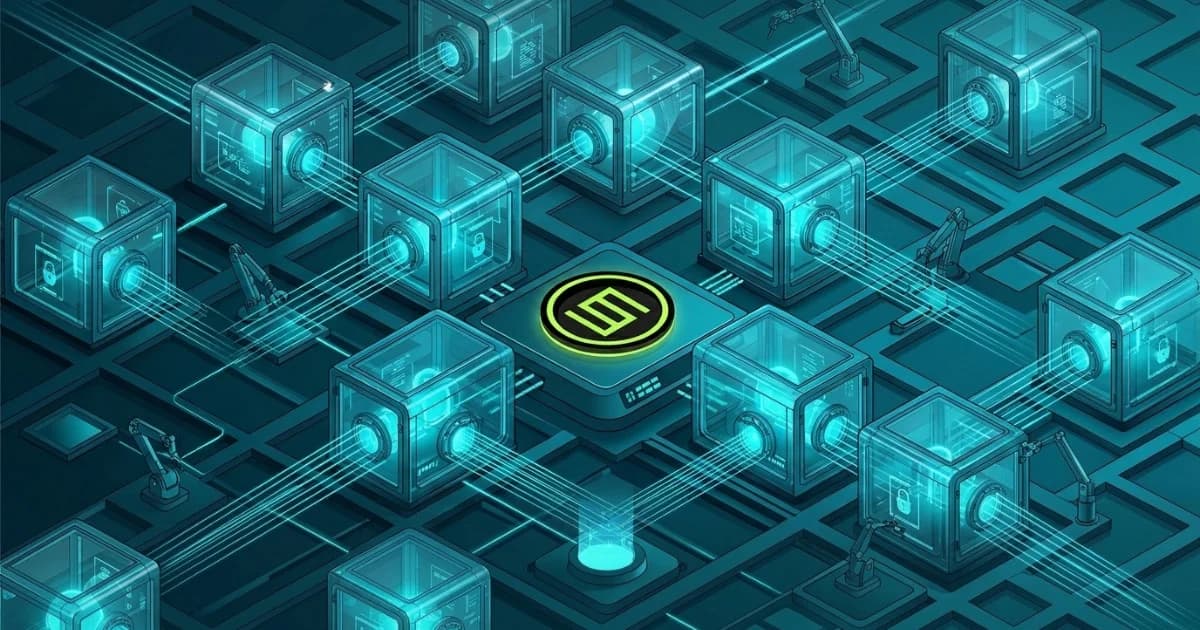
The Restaking Metamorphosis: Shifting from Monolithic to Modular Trust
- Symbiotic enters the landscape just as the explosion of shared-security protocols permanently altered the dynamics of capital efficiency in decentralized ecosystems. By allowing stakers to reuse their locked asset weight to underwrite external decentralized applications, restaking eliminated the massive bootstrapping costs that historically crippled early-stage blockchain infrastructure. However, pioneering frameworks adopted a highly integrated, monolithic approach, tying shared security strictly to Ethereum-native assets, implementing top-down platform curation, and concentrating systemic vulnerabilities inside a singular, shared smart contract repository.
- Symbiotic completely reimagines this relationship by introducing a fully permissionless, asset-agnostic shared security protocol. Functioning as an open, universal trust layer, Symbiotic allows any decentralized application or network to configure its own custom restaking rules using virtually any asset class on the market. This comprehensive guide breaks down Symbiotic’s modular, vault-first primitives, details its decentralized slashing coordination, and maps its architectural differences against market giant EigenLayer.

1. The Modular Architecture: Deconstructing the Symbiotic Blueprint
Rather than orchestrating a centrally curated pool of assets and operators, Symbiotic handles shared security as a raw, non-opinionated commodity marketplace. The protocol strips out governance gatekeeping by separating its system into five independent, plug-and-play primitives:
Collateral (The Asset Layer)
Symbiotic does not restrict deposits to native crypto or specific liquid staking tokens. Instead, it supports nearly any token standard by converting arbitrary assets into distinct "collateral tokens." This custom wrapper handles the raw asset mechanics while isolating the token's core market value from active network slashing permissions.
Vaults (The Capital Orchestration Hub)
Vaults serve as the core foundational layer of Symbiotic. A vault is an isolated smart contract environment created by fund managers, protocols, or community developers to manage user deposits, allocate capital to specific node operators, and establish individual risk-tolerance parameters.
Operators (The Computational Engine)
Operators run the high-performance physical server hardware required to execute infrastructure tasks. They opt into specific vaults, receive delegated capital backing, and configure their nodes to support the technical requirements of security-consuming protocols.
Networks (The Security Consumers)
Networks represent the decentralized protocols, application-specific blockchains, oracles, data layers, or cross-chain bridges that need to borrow economic security to safely run their distributed validation processes.
Resolvers (The Arbitration Layer)
Resolvers are independent entities, slashing committees, or decentralized organizations selected by mutual agreement between a vault and a network. They act as impartial judges with absolute veto power over slashing requests, shielding honest operators from unfair automated protocol penalties.
2. The Vault-First Paradigm and Granular Risk Isolation
The fundamental engineering choice that sets Symbiotic apart is its strict vault-first design philosophy.
- In a traditional restaking model, all user deposits flow into a centralized pooling engine where the protocol or the delegated node operator determines the exact package of secured services. This structure means a critical vulnerability or rogue exploit inside one external application can trigger a cascading slashing chain that compromises the entire pool's collateral.
- Symbiotic mitigates this vulnerability by ensuring that every single vault functions as an isolated financial sandbox. Anyone can spin up a custom vault permissionlessly, dictating exactly which assets are accepted, which node operators receive backing, and which exact networks are underwritten.
- This compartmentalization delivers institutional-grade risk isolation: if a specific decentralized application backed by a vault experiences a catastrophic failure or a software exploit, the resulting financial damage is structurally locked inside that single vault's balance. The broader Symbiotic protocol and all surrounding alternative vaults remain completely unimpacted.
3. Slashing Coordination and Decentralized Resolver Vetoes
- Enforcing real, credible economic security requires a protocol to possess reliable mechanisms to penalize malicious validation behavior. However, immediate automated slashing without human oversight exposes users to severe false-positive risks caused by protocol software glitches or node connectivity dropouts.
- Symbiotic resolves this friction through its modular Resolver framework. When a network detects a verification error or a security breach committed by an operator, it cannot instantly burn the vault's underlying tokens. Instead, it submits a formal slashing proposal to the vault's pre-designated Slasher module.
- The designated Resolver reviews the incoming proposal during a mandatory review window. The Resolver functions as an on-chain court of arbitration, evaluating the raw cryptographic logs to determine whether the operator acted maliciously or simply suffered a non-threatening infrastructure glitch.
- If the Resolver confirms a malicious attack, the slashing request is approved and the collateral is burned. If the request is deemed unfair, the Resolver executes an un-appealable veto, freezing the malicious penalty and protecting the staker's principal assets from unwarranted depletion.
4. Head-to-Head Technical Divide: Symbiotic vs. EigenLayer
Understanding the trade-offs between the two dominant shared security networks requires analyzing the core philosophies shaping their system rules.
Shared Security Ecosystem Comparison
| Feature | EigenLayer | Symbiotic |
| Core Focus | Ethereum-centric | Universal / Agnostic |
| Assets | ETH, LSTs, EIGEN | Any ERC-20 token |
| Structure | Centralized pools | Isolated vaults |
| Slashing | Central committee | Custom Resolvers |
| Contracts | Upgradable (DAO) | Immutable base |
| Traction | Deep AVS market | Lido ecosystem |
Universal On-Chain Forensics and Trading Telemetry via DEXTools
- The use of advanced decentralized charting architectures, such as DEXTools, provides market participants with an essential, universal platform for monitoring token behavior in real time, assessing the depth of liquidity pools, and inspecting contract parameters across all public blockchains.
- By leveraging key features such as the Pair Explorer, the Live New Pairs dashboard, and Trade Story, among other options, technical traders can analyze localized volume trends and verify the security scores of automated contracts before initiating any on-chain interactions. This ensures that their secure hardware setup only interacts with verified markets.
You can access DEXTools here and start trading today.
Disclaimer: This article is for informational purposes only and does not constitute investment advice, financial advice, trading advice, or any other kind of advice. DEXTools does not recommend buying, selling, or holding any cryptocurrency or token. Users should conduct their own research and consult with a qualified financial advisor before making any investment decisions. Cryptocurrency investments are volatile and high-risk. DEXTools is not responsible for any losses incurred.
The Symbiotic Trust Model: Beyond Simple Slashing
While often simplified to a "slashing" mechanism, Symbiotic's trust model is far more nuanced, reflecting a sophisticated understanding of distributed systems and economic incentives. It moves beyond a one-size-fits-all approach to security, recognizing that different AVSs (Actively Validated Services) have unique risk profiles and requirements. This modularity in trust allows for a more efficient allocation of capital and a more robust overall security posture for the decentralized ecosystem.
The core innovation lies in the customizable resolver loops and the flexible operator selection. Instead of relying on a single, monolithic security layer, Symbiotic enables AVSs to design their own specific trust parameters, choosing from a variety of collateral types, operator reputations, and dispute resolution mechanisms. This empowers AVSs to tailor their security to their exact needs, optimizing for both capital efficiency and resilience.
Designing Your AVS's Trust Parameters
- Define acceptable collateral types: ETH, LSTs, LRTs, or custom tokens.
- Specify minimum operator stake requirements and reputation thresholds.
- Establish the duration and complexity of the dispute resolution period.
- Determine the specific slashing conditions and their severity for different offenses.
- Select or design the preferred resolver mechanism for dispute adjudication.
This granular control over trust parameters ensures that AVSs can adapt to evolving threats and maintain a security model that is both effective and economically sustainable. Symbiotic transforms restaking into a dynamic, adaptable framework for universal trust.
Related Guides
- What Is Symbiotic: Permissionless Restaking Guide (2026)
- Top 5 Restaking Protocols in 2026: EigenLayer, EtherFi, Symbiotic and More
- What Is Hyperlane: Permissionless Interoperability Guide (2026)
- What Is YieldNest (YND)? The MAX LRT Liquid Restaking Protocol Explained in 2026
- What Is Restaking: Complete EigenLayer & EtherFi Guide (2026)
Frequently Asked Questions
What is Symbiotic?
Symbiotic is a restaking framework designed to act as a flexible, permissionless layer for shared security. It lets networks tap into staked assets to help secure their services.
What is restaking in crypto?
Restaking is reusing already staked assets to provide security to additional networks or services beyond the original chain. It lets the same capital support more than one protocol.
What does permissionless mean in the context of Symbiotic?
Permissionless means participants can join and build on the framework without needing approval from a central gatekeeper. This is intended to make the system more open and modular.
What are vaults and operators in restaking frameworks?
Vaults typically hold and manage staked assets, while operators run the infrastructure that provides services to networks. Together they help coordinate how staked capital is allocated and secured.