
What Is the Metaverse in Crypto? Web3 Worlds Guide 2026
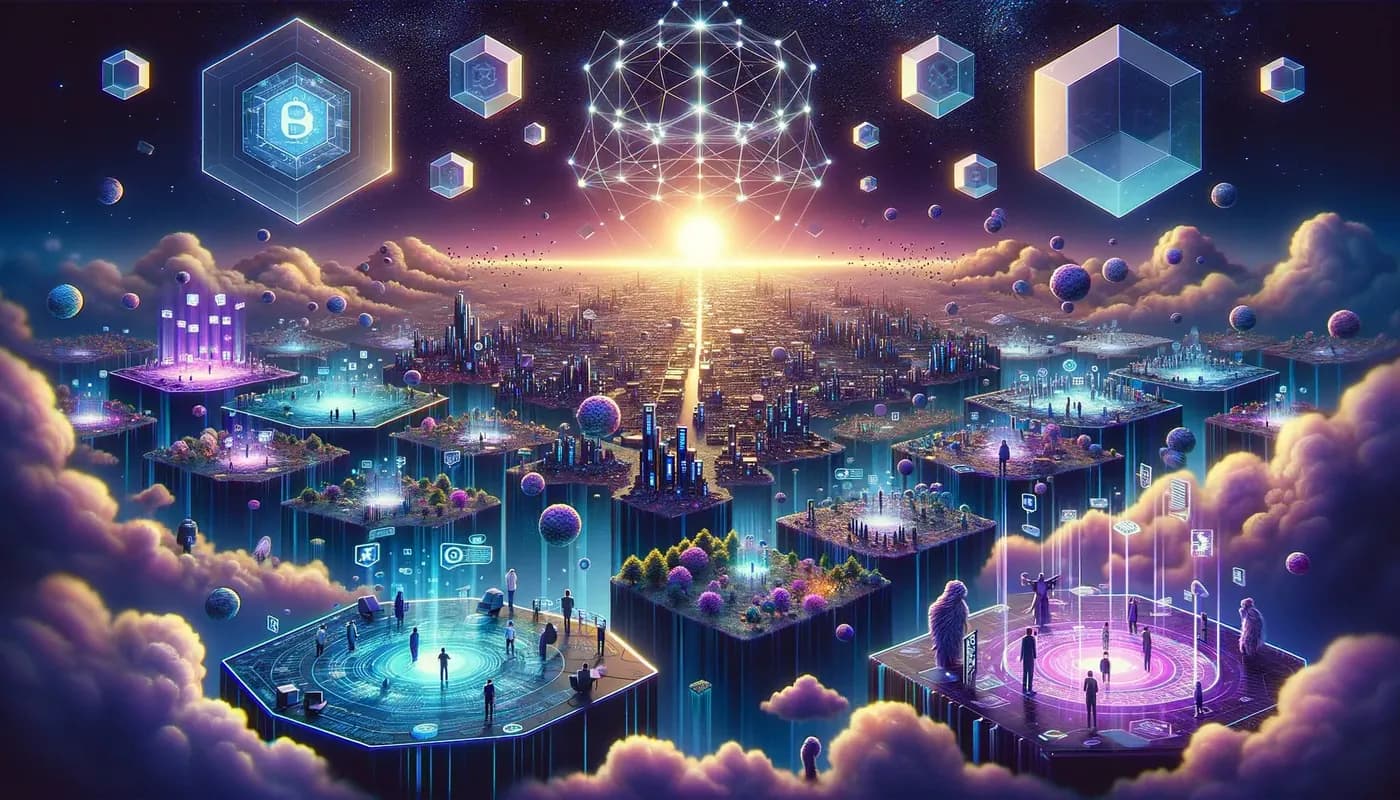
The metaverse went from sci-fi fantasy to multi-billion-dollar corporate obsession and back to quiet, sober reality in less than five years. In 2021 every brand on earth announced a virtual showroom, Facebook renamed itself Meta, and parcels of digital land sold for the price of a Manhattan apartment. By 2023 the hype had collapsed, token prices were down 90%, and headlines declared the metaverse "dead." Yet in 2026 the technology is still here, still being built, and arguably more interesting than ever, just without the marketing circus.
So where does the crypto metaverse actually stand today? Some platforms have stabilized into niche communities. Others have pivoted, merged, or quietly shut down. New players like AI-generated worlds and consumer-grade AR glasses are pushing the conversation in directions nobody predicted in 2021. The big question is no longer "will the metaverse exist" but rather "what will it actually be useful for, and who owns it?"
This guide cuts through both the hype and the cynicism. You will learn what the metaverse actually means, why crypto and Web3 are central to its open, user-owned vision, how it differs from corporate Web2 worlds like Meta Horizon and Roblox, the top platforms still standing in 2026, how to buy virtual land safely, the real challenges nobody talks about, and how to take your first steps without losing money to a dead project. Whether you are curious, skeptical, or ready to buy your first parcel, this is the clear-eyed overview you need.

What Is the Metaverse?
The word "metaverse" was coined by novelist Neal Stephenson in his 1992 cyberpunk novel Snow Crash. In the book, the metaverse is a shared virtual reality where users interact as avatars in a 3D urban environment. Three decades later, the concept has expanded far beyond Stephenson's original vision, but the core idea remains the same: a persistent, immersive, shared digital space where people can socialize, work, play, and transact as if it were a real place.
Defining the metaverse precisely is tricky because the term has been stretched and abused by marketers. A simple chat room is not a metaverse. A multiplayer video game is closer, but still not quite there. To qualify as a true metaverse, a virtual world typically needs several properties: it must be persistent (it exists whether you are logged in or not), shared (many users coexist simultaneously), immersive (3D, spatial, often supporting VR or AR), interoperable (assets and identity can move between contexts), and ideally user-owned (creators and participants control the economy, not a single corporation).
That last property is where crypto enters the picture. In a corporate metaverse like Meta Horizon Worlds, everything you "own" is actually a license granted by the platform. Meta can revoke it, change the terms, or shut the world down entirely. In a crypto metaverse, your land, avatar, wearables, and items are NFTs recorded on a public blockchain. Nobody can take them away. You can sell them on any compatible marketplace. You can theoretically use the same avatar across multiple worlds. This is the fundamental promise of the Web3 metaverse: digital ownership that behaves like physical property.
The 4 Pillars of the Crypto Metaverse
Every serious crypto metaverse platform is built around four core pillars. Understanding these helps you cut through marketing jargon and evaluate any new project on its actual fundamentals.
Your 3D identity. An NFT-based character with customizable appearance, wearables, and traits that travels with you.
Tokenized plots called parcel or LAND, mapped to coordinates and tradable on open marketplaces.
NFT items: clothes, furniture, art, vehicles, even buildings. Each one is a unique on-chain token you fully own.
Token holders vote on platform decisions through a DAO, replacing corporate boards with collective ownership.
These four pillars work together. Your avatar walks across parcels of land owned by other users, wearing digital clothes you purchased, while the rules of the entire economy are set by token holders rather than a CEO in Menlo Park. Remove any pillar and you lose part of what makes the crypto metaverse distinct from a regular video game.
Web2 vs Crypto Metaverse: Why Decentralization Matters
The fight over what the metaverse should be is fundamentally a fight between two visions. On one side: closed, corporate platforms run by single companies that maximize engagement and ad revenue. On the other: open, blockchain-based worlds where users own the economy.
Meta Horizon, Roblox, Fortnite, VRChat
- Closed ecosystem, single owner
- Items are licenses, not property
- Account can be banned, assets lost
- No interoperability between worlds
- Platform sets all rules and fees
- Higher polish, larger user base
Decentraland, The Sandbox, Otherside, Somnium Space
- Open standards, multiple clients
- Assets are NFTs you truly own
- No central authority can revoke them
- Cross-world identity via wallet
- DAO governance by token holders
- Smaller user base, more freedom
The honest assessment in 2026 is that both models have real strengths and real weaknesses. Roblox alone has more daily active users than every crypto metaverse combined by an order of magnitude. Meta has poured tens of billions of dollars into Horizon and built genuinely impressive technology. The crypto metaverse cannot match that polish or scale yet. But the crypto side offers something Web2 fundamentally cannot: a credible promise that what you build and buy is yours forever, regardless of what happens to any one company.
The most likely long-term outcome is convergence. Web2 platforms will gradually adopt blockchain rails for items and identity to court creators tired of platform risk, while crypto platforms will improve their UX until joining feels as easy as signing up for a game. We are already seeing early signs of this hybrid future.
The Role of NFTs and Tokens
NFTs and tokens are the rails on which the crypto metaverse runs. Without them, you do not have ownership, you have a database entry on someone else's server. Let us break down how each type of asset works.
Land NFTs: Every parcel in Decentraland or The Sandbox is an ERC-721 NFT on Ethereum. Decentraland uses the LAND contract where each token represents a specific 16x16 meter plot at fixed coordinates. The Sandbox uses similar parcels. You can verify ownership on Etherscan, transfer it to another wallet, or sell it on OpenSea, and no platform team needs to approve the transaction.
Wearable NFTs: Avatar items like hats, jackets, sneakers, and accessories are also NFTs. Major fashion brands including Gucci, Adidas, Nike (through RTFKT), and Dolce & Gabbana have all released digital wearable collections. These items can be worn on your avatar across compatible platforms and resold like any other NFT.
Governance and utility tokens: Most major crypto metaverses have a fungible token that acts as in-world currency, governance vote, and economic stake. Decentraland uses MANA as its primary token. The Sandbox uses SAND. Yuga Labs' Otherside ecosystem uses APE. These tokens let holders vote on protocol changes, pay for transactions inside the world, and capture economic upside if the platform grows.
PFP and identity NFTs: Profile picture collections like the BAYC (Bored Ape Yacht Club) often double as metaverse identity. Yuga Labs gave Bored Ape holders early access to Otherdeed land NFTs, and many crypto metaverses now support importing PFP characters as 3D avatars.
Top Crypto Metaverse Platforms in 2026
After the 2022 reset, the crypto metaverse landscape consolidated significantly. Many smaller projects folded or pivoted, but a handful of platforms have survived and continue to build. Here are the ones that matter today.
Token: MANA
The original blockchain metaverse. DAO-governed, browser-based, hosts events and virtual real estate.
Token: SAND
Voxel-based, brand-heavy. Hosts experiences from Snoop Dogg, Atari, Warner Music, and others.
Token: APE
Yuga Labs' MMORPG-style metaverse. Tied to Bored Ape ecosystem with high-quality 3D production.
Token: CUBE
VR-first, persistent, no resets. Popular among VR enthusiasts and digital architects.
Token: Robux (centralized)
Not crypto, but enormous in scale. The benchmark every crypto metaverse is judged against.
Decentraland is the longest-running crypto metaverse and the closest thing to a flagship. Launched in 2020 after years of development, it is fully browser-based, requires no download, and is governed by a DAO of MANA holders. Daily active users remain modest (typically in the low thousands), but the platform hosts a steady stream of events, including the recurring Metaverse Fashion Week and live music performances.
The Sandbox took a different approach, partnering aggressively with major brands and celebrities. Snoop Dogg's "Snoopverse," Atari's retro gaming district, and dozens of other branded experiences live on Sandbox parcels. The voxel art style is reminiscent of Minecraft and the game maker tools are powerful, making it especially popular with creators.
Otherside, developed by Yuga Labs (the team behind Bored Ape Yacht Club), generated massive hype when its Otherdeed land NFTs sold out for over $300 million in May 2022. The platform has since released several alpha and beta playtests featuring large-scale multiplayer experiences. Production quality is significantly higher than older crypto metaverses.
Somnium Space caters to VR purists. It runs on Oculus, HTC Vive, and other headsets with full body presence, and has a strict policy of no world resets, meaning everything you build stays forever. Smaller community, but devoted.
How to Buy Virtual Land
If you want to own a piece of the metaverse, here is how the process actually works in 2026. The steps are similar to buying any other NFT, but parcels have unique considerations that make due diligence especially important.

Step 1: Set up a self-custody wallet. You will need an Ethereum-compatible wallet like MetaMask, Rabby, or Coinbase Wallet. Write down your seed phrase on paper, store it offline, and never share it with anyone. This wallet is now your metaverse identity.
Step 2: Fund the wallet with ETH and the platform's token. Decentraland requires ETH for gas and MANA for purchases. The Sandbox needs ETH and SAND. Buy the tokens on a reputable exchange and withdraw them to your wallet. Make sure you have a small ETH buffer (at least 0.02 ETH) to cover gas fees.
Step 3: Choose a marketplace. The official platforms (Decentraland Marketplace, Sandbox Map) are the most trustworthy. OpenSea, LooksRare, and Blur also list metaverse land NFTs. Always double-check that you are buying the correct contract address. Scammers often list fake parcel collections that look identical to the real thing.
Step 4: Do parcel due diligence. Not all virtual land is equally valuable. Key factors:
- Location: Parcels near major plazas, popular districts, or branded areas tend to be more valuable.
- Adjacency: Land next to popular destinations gets more foot traffic.
- Estate or single parcel: Estates (multiple connected parcels) allow bigger builds and command premiums.
- Platform activity: Check current daily active users. A pretty parcel in an empty world is worthless.
- Historical sales: Look at recent transaction prices in the area. Avoid paying above the trend.
Step 5: Buy and verify. Once you confirm the purchase, the NFT lands in your wallet. Visit the platform's land manager, connect your wallet, and verify the parcel shows up as yours. Now you can build on it, rent it out, or hold it as an investment.
One final warning: virtual land prices crashed roughly 90% from their 2021-2022 highs and have not recovered. Buy because you want to use the land or because you believe in the long-term platform, not because you expect a quick flip.
Use Cases Beyond Gaming
The most interesting metaverse use cases in 2026 have moved well beyond gaming and speculation. Some are working today, others are still experiments, but all hint at what immersive 3D plus blockchain ownership could enable.
Virtual events and concerts: Artists like Travis Scott (in Fortnite), Snoop Dogg (in Sandbox), and dozens of smaller acts have hosted live performances inside metaverse platforms. Attendees can interact with friends, buy exclusive merchandise as NFTs, and experience visual effects impossible at a physical venue. Conferences like NFT NYC have also experimented with hybrid physical-and-virtual attendance.
Education and training: Some universities offer virtual campuses with lecture halls, lab simulations, and student housing. Medical schools use VR for surgical training where students can practice procedures without risk. Corporate training programs increasingly use immersive simulations for everything from sales role-play to emergency response drills.
Virtual real estate and rentals: Beyond owning land, an active rental economy has emerged. Brands rent space for time-limited campaigns. Creators rent venues for events. Some parcel owners earn passive income from steady tenant demand near popular districts.
Brand experiences and retail: Companies including Gucci, Nike, Coca-Cola, and Samsung have built persistent stores or pop-ups inside metaverses. Visitors can browse products, try on virtual versions, and sometimes buy physical items shipped to their address. The conversion economics are still being figured out, but brand teams treat these spaces as long-term marketing investments.
Work meetings and remote collaboration: Spatial computing, especially with VR headsets, makes remote meetings feel less like Zoom and more like being in the same room. Architecture firms collaborate on building models. Game studios review level designs together. Some remote-first companies hold their entire weekly meetings inside virtual offices.
Fashion shows and digital wearables: Metaverse Fashion Week, originally launched in Decentraland, now spans multiple platforms and features major luxury brands. Digital-only fashion lines from designers like RTFKT (now part of Nike) and DressX cater to consumers who want to dress their avatar or simply enjoy clothes that exist purely as code.
The Meta-Hype Cycle: Boom 2021, Bust 2022, Reset 2023-2026
Understanding the metaverse in 2026 requires understanding the wild boom-and-bust cycle that just happened. The narrative arc is essential context for anyone evaluating today's projects.
2021: The boom. Several factors collided. The pandemic had pushed millions of people into virtual interaction. NFTs exploded in popularity. Facebook rebranded to Meta in October 2021 and committed $10 billion per year to building its vision of the metaverse. The Sandbox raised major rounds. Decentraland land prices spiked. Otherdeed sales hit nine figures. Every consultancy published a metaverse white paper. Every brand announced a virtual showroom. Crypto prices were at all-time highs and the future seemed inevitable.
2022: The bust. The macro crypto market collapsed starting in late 2021 and accelerated through 2022. Terra/Luna imploded in May. Three Arrows Capital, Celsius, and FTX collapsed in succession. NFT trading volumes fell over 95%. Meta's Reality Labs division reported massive losses. Daily active users on Decentraland and The Sandbox were widely reported (sometimes unfairly, sometimes accurately) as being in the low thousands or even hundreds. The phrase "metaverse is dead" became a mainstream headline.
2023-2025: The reset. Hype evaporated, but development quietly continued. Yuga Labs released multiple Otherside playtests. Decentraland and Sandbox shipped new tooling. Apple released the Vision Pro in 2024, dragging spatial computing back into the cultural conversation. AI exploded and started to merge with metaverse content creation. Most importantly, the projects that survived 2022 were forced to focus on actual users and use cases rather than token speculation.
2026: The grown-up phase. The crypto metaverse today is smaller, more focused, and frankly more honest than it was in 2021. Token prices are far below all-time highs. Daily active users on most platforms remain modest. But the technology has improved, the use cases are more concrete, and the survivors have proven they can ship through a bear market. Whether this is the foundation for a 2027 or 2028 resurgence or simply a permanent niche remains an open question.
Challenges and Critiques
Honest discussion of the metaverse requires acknowledging the real problems. Plenty of smart, well-meaning observers think the whole concept is overhyped, and they raise legitimate points.
Low daily active users. The flagship crypto metaverses have struggled to attract and retain large user bases. Independent analyses of Decentraland and The Sandbox have repeatedly shown daily active users measured in the thousands, not millions. Compare this to Roblox (over 80 million daily users), Fortnite, or even smaller traditional MMOs, and the scale gap is enormous. Without users, virtual land is just an entry in a database.
Fragmentation. Dozens of platforms compete for attention with no real interoperability. Your Decentraland avatar cannot walk into The Sandbox. Your wearables from one world do not appear in another. This violates the spirit of an "open metaverse" and dilutes any single platform's network effects.
Hardware barriers. True immersive experiences want VR or AR hardware that most consumers do not own. Quest headsets are still bulky. Apple Vision Pro is expensive. AR glasses with mainstream form factor are only just arriving. Until hardware is as comfortable and ubiquitous as smartphones, the metaverse will feel like a future tense rather than present reality for most people.
Content creation gap. Building a compelling virtual world is expensive and difficult. Most metaverse parcels are empty or filled with low-quality builds. Compared to the polish of mainstream games and centralized platforms, the user-generated content in crypto metaverses often disappoints. Better tools and AI-assisted creation may close this gap, but it remains a real critique today.
Speculative damage. The 2021 hype cycle attracted huge amounts of speculative capital, much of which got wiped out in 2022. This soured many newcomers on the entire concept and made the term "metaverse" a marketing red flag. Rebuilding trust takes years.
Metaverse Wearables, Identity and ENS
Your metaverse identity is more than just an avatar. It is the combination of your wallet, your PFP, your wearables, your ENS name, your soulbound credentials, and your on-chain history. Together they form a portable identity that travels with you across any compatible world.
Digital fashion brands. RTFKT pioneered NFT sneakers and was acquired by Nike in 2021. Gucci has released multiple wearable collections in Roblox and crypto platforms. Adidas Originals partnered with Bored Ape Yacht Club. Dolce & Gabbana, Tommy Hilfiger, Balenciaga, and Burberry have all dipped into digital wearables. Some of these collections trade in the secondary market with surprising liquidity.
ENS as metaverse identity. Owning ENS names like "yourname.eth" gives you a human-readable identity that resolves to your wallet address. Many crypto platforms now display ENS names instead of long wallet hashes when you connect, making social interaction feel less anonymous. ENS records can also store profile pictures, bio info, and links to your other accounts, functioning as a portable Web3 business card.
Soulbound credentials. An emerging category of non-transferable NFTs records achievements, memberships, and certifications. You might earn a soulbound badge for completing an educational course, attending a conference, or contributing to a DAO. These credentials are useful in the metaverse because they let other users verify who you are without revealing personal data. A "verified developer" badge can be checked instantly on-chain.
Avatar interoperability efforts. Standards like ERC-6551 (token-bound accounts) and ongoing 3D avatar format work aim to let one avatar move between platforms. Progress is slow because each platform has different art styles, technical requirements, and business incentives, but the direction is clear.
AI and the Metaverse Convergence
If 2021 was the year of metaverse hype, 2023-2026 has been the year of AI. The two technologies are converging in ways that could finally make virtual worlds compelling enough for mainstream adoption.

AI agents as NPCs. Non-player characters in traditional games follow scripted dialogue trees. Modern AI-powered NPCs can have unscripted conversations, remember past interactions, react to player behavior, and develop personality. Imagine wandering a virtual city and talking to a shopkeeper whose answers are not pre-written but generated dynamically based on your history with them. Several metaverse projects are integrating large language models for exactly this.
Generative worlds. Building a virtual world parcel by parcel is slow. AI-powered tools can generate environments, buildings, and props from text prompts, dramatically lowering the barrier to creation. Platforms are experimenting with "describe your world" interfaces where a casual user can build an experience in hours that previously required a team of 3D artists.
AI-powered avatars. Your avatar can be more than a controlled puppet. AI-driven avatars can respond to your voice with realistic lip sync, mirror your facial expressions through your webcam, and even act on your behalf when you are offline. Some experiments let users train a personal AI agent that represents them in social interactions inside the metaverse.
Content moderation and safety. AI models are increasingly used to detect harassment, scams, and inappropriate content in real time. This is essential in a persistent virtual space where bad actors can cause real harm.
The Future: AR Glasses, Persistent Worlds, Interoperability Standards
What does the metaverse look like five or ten years from now? Several trends point toward a specific direction, although the timing is anyone's guess.
AR glasses going mainstream. Meta, Google, Apple, Samsung, and Snap are all building consumer AR glasses. When form factor catches up with normal eyewear and battery life lasts a full day, augmented reality will overlay digital content onto the physical world, blurring the line between "the metaverse" and "everyday life." The biggest shift will not be VR worlds you visit but persistent digital layers you live inside.
Persistent, always-on worlds. The next generation of metaverse platforms aim to be truly persistent. Whatever you build stays. Whatever you do leaves a trace. The world keeps evolving whether you are present or not. This is the original Snow Crash vision finally becoming technically feasible thanks to cheaper compute and better infrastructure.
Interoperability standards. The Open Metaverse Alliance for Web3 (OMA3), Khronos Group's MSF (Metaverse Standards Forum), and other industry groups are pushing for shared standards on avatars, items, identity, and protocols. Real progress requires major platforms cooperating, which is hard but not impossible. We may see something like the early internet, where TCP/IP standardization unlocked massive growth, happening again for virtual worlds.
AI native worlds. Worlds entirely generated and populated by AI agents are technically possible now. Whether users will prefer these to human-built spaces is unclear, but the cost of creating compelling content is falling so fast that the question will be answered empirically soon.
How to Get Started in the Metaverse
If you want to actually try the crypto metaverse rather than just read about it, here is a beginner checklist that works in 2026. It is intentionally cautious because losing your seed phrase or buying into a dying platform are both real risks.
If you find yourself enjoying the experience and ready for more, you can graduate to buying small parcels of land, contributing to a metaverse DAO, or even building your own experiences with the platform tools. The space rewards curiosity and patience over speculation.
Frequently Asked Questions
Is the metaverse dead in 2026?
No, but it is far smaller and less hyped than in 2021. Major platforms like Decentraland, The Sandbox, and Otherside continue to operate and ship updates. Token prices and daily active users are well below peak levels, but development has continued steadily through the bear market. The mainstream cultural moment has passed; what remains is a smaller, more focused community building real products.
How do I buy land in the metaverse?
Set up a self-custody wallet like MetaMask, fund it with ETH and the platform's native token (MANA for Decentraland, SAND for The Sandbox), connect to an official marketplace or OpenSea, verify the contract address is legitimate, and purchase a parcel. Always check the parcel's location, neighboring activity, and recent sale prices before committing. The NFT goes directly to your wallet upon purchase.
Do I need a VR headset for the metaverse?
No. Most major crypto metaverses including Decentraland and The Sandbox run in a regular web browser using mouse and keyboard. A VR headset enhances immersion but is not required. Somnium Space is VR-first, so if you want to use that platform fully, a Quest or similar headset helps. For your first exposure, a normal laptop is plenty.
What is the most popular crypto metaverse?
By market capitalization of the native token and historical brand recognition, Decentraland and The Sandbox have been the top two crypto metaverses for years. Otherside, developed by Yuga Labs, has higher production values and a passionate community tied to Bored Ape Yacht Club. If you count Web2 platforms with metaverse-like features, Roblox dwarfs every crypto platform combined in user count.
Are metaverse tokens a good investment?
This guide is not financial advice. Metaverse tokens like MANA, SAND, and APE have been highly volatile and lost roughly 90% from their 2021 peaks. They could recover, stagnate, or decline further. Treat any metaverse token allocation as a high-risk position, only invest amounts you can afford to lose entirely, and prefer using these tokens for actual platform participation rather than pure speculation.
What is the difference between Web2 and Web3 metaverses?
Web2 metaverses like Meta Horizon and Roblox are owned by single companies that control all assets, set all rules, and can ban accounts or revoke items at any time. Web3 metaverses like Decentraland and The Sandbox use blockchain so that users own their land, wearables, and identity as NFTs. Web3 platforms also typically use DAO governance, giving token holders a vote on key decisions rather than a corporate board.
Can I make money in the metaverse?
Yes, but it is harder than it looks. People earn money in the metaverse by renting out land, selling wearables and digital assets they create, building experiences for brands, hosting events, providing services like virtual architecture, and trading tokens. The income tends to be modest unless you build genuine expertise. Most people who tried to flip land parcels in 2021 lost money when prices crashed.
Conclusion
The metaverse in 2026 is neither the inevitable future predicted in 2021 nor the dead concept dismissed in 2023. It is something more interesting and harder to summarize: a maturing technology with real use cases, persistent communities, and a clear philosophical distinction between corporate and crypto-native versions. The hype has burned off. What remains is the actual work.
The case for the crypto metaverse rests on a simple bet: people will increasingly want to own their digital assets and identity, and blockchain is the only technology that lets them do so without trusting a single company. If that bet is right, today's small but stubborn platforms could be the foundation of a much larger future. If it is wrong, the metaverse will remain a niche corner of crypto culture and a marketing checkbox for Big Tech. Either outcome is possible, and the next few years will provide the answer.
For now, the smartest approach is to engage with the technology directly. Set up a wallet, visit Decentraland, attend a virtual event, try on a wearable. Form your own opinion based on what you actually experience rather than what headlines tell you. The Web3 metaverse may not yet be the destination it once promised, but it is real, it is being built, and it is worth understanding on its own terms.
Related Guides
- What Is Web3: The Complete Guide to the Decentralized Internet (2026)
- What Is Unstoppable Domains: Web3 Domains, Identity and Digital Ownership (2026)
- What Is thirdweb: Smart Contracts, Wallets and Web3 Developer Tools (2026)
- What Is Tenderly: Web3 Simulation, Debugging and Full-Stack Infrastructure (2026)
- What Is Tenderly: Smart Contract Simulation, Debugging and Web3 Monitoring (2026)